
AMD Ryzen 9 9900X
4.8Editor score
12 Cores 24 Threads
Zen 5 Architecture
Affordable High Performance
This guide compares the top CPUs for machine learning tasks including AI training, inference, and data processing to help you choose the right hardware for
Selecting the right processors for machine learning is critical for efficient model training and inference. High core counts, large caches, and strong single-thread performance ensure smooth workflows.
We evaluated ten leading desktop CPUs based on architecture, core configuration, cache size, and compatibility with AI software stacks. Our analysis focuses on real-world productivity for developers and researchers.
Each pick highlights specific strengths for local AI workloads. Prices fluctuate frequently, so verify current listings before purchasing to ensure you get the best value for your budget today.
4.8Editor score

4.7Editor score

5.0Editor score
The following table provides a side-by-side comparison of the top ten CPUs selected for machine learning workloads. We highlight key specifications such as core counts, architecture generation, and cache sizes to help you make an informed decision.


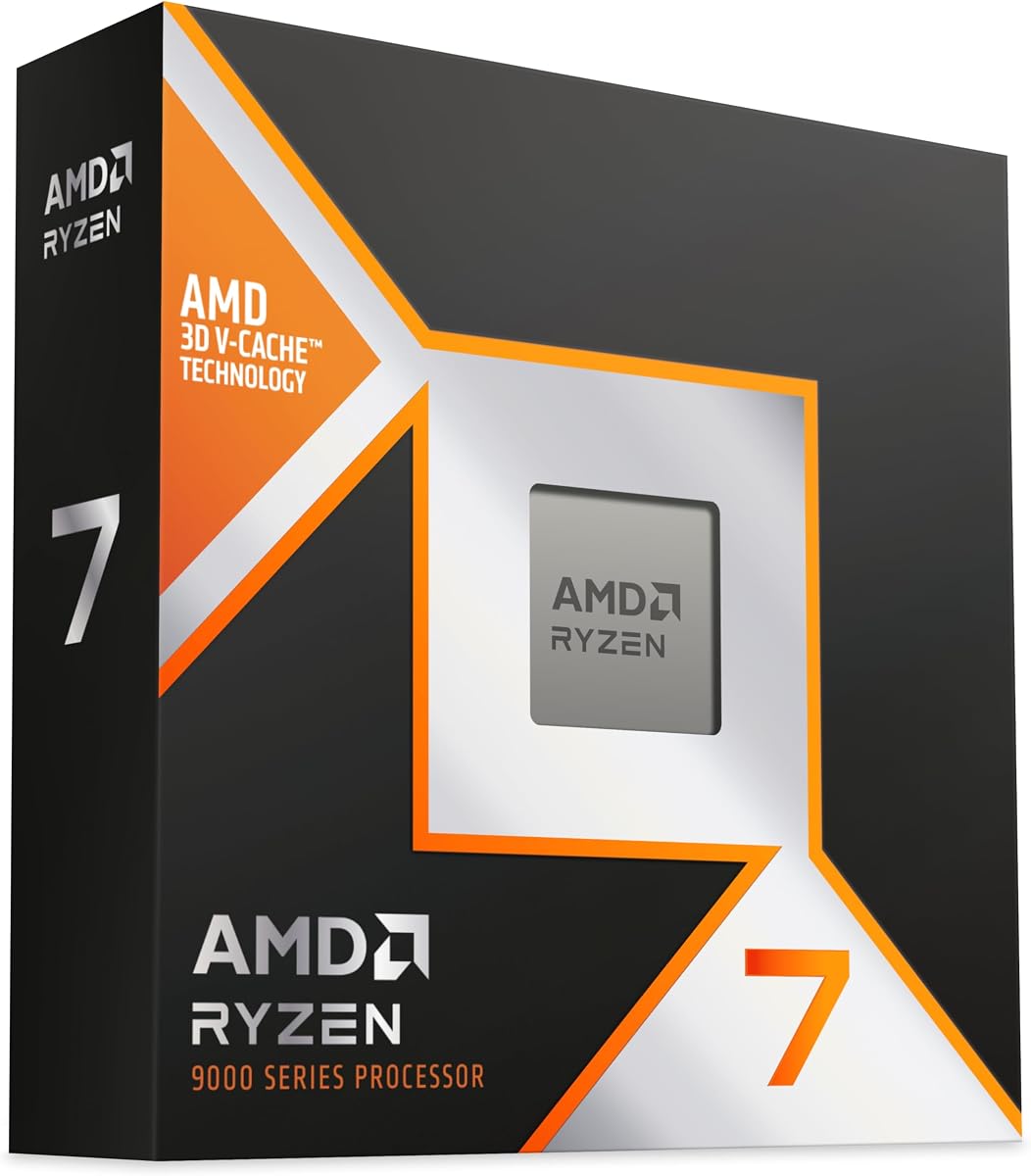

The AMD Ryzen 9 9950X3D stands out as the top pick for machine learning workloads requiring substantial CPU power. It combines 16 cores and 32 threads with Zen 5 architecture to deliver exceptional throughput for data preprocessing and model training tasks.
We may earn a commission when you buy through this link, at no additional cost to you.
Its high boost clock speed of up to 5.7 GHz ensures fast execution of single-threaded operations common in certain ML frameworks. The large cache memory helps reduce latency when handling complex datasets on the CPU directly.
While it offers top-tier performance, users should consider the thermal requirements and ensure adequate cooling is in place. The price point reflects its premium capabilities but remains competitive for serious professionals.
Buy this processor if you need maximum multi-threaded power for local development without relying entirely on cloud resources. It balances raw speed with architectural efficiency effectively for diverse AI projects.
The 16 cores allow multiple parallel processes to run simultaneously, significantly speeding up data pipelines and batch processing jobs.
Zen 5 improvements in IPC and power efficiency mean you get more work done per watt, crucial for long training sessions.
We may earn a commission when you buy through this link, at no additional cost to you.
The AMD Ryzen 9 9900X offers a compelling balance of performance and affordability for machine learning enthusiasts. With 12 cores and 24 threads, it handles heavy computational loads efficiently while remaining accessible to a wider audience.
We may earn a commission when you buy through this link, at no additional cost to you.
Its unlocked multiplier allows for easy overclocking to squeeze out extra performance when needed. The support for DDR5 memory ensures fast data transfer rates which benefit large dataset handling during training cycles.
Keep in mind that the cooler is not included in the box so you will need to source a suitable solution separately. This adds to the initial cost but allows for better thermal management tailored to your system.
This processor is ideal for developers who want strong multi-core capabilities without spending top premium dollars. It delivers robust productivity for standard machine learning tasks at a very competitive price point.
The unlocked status lets enthusiasts push clock speeds further for maximum throughput during intensive workloads.
Getting Zen 5 architecture at this price point makes high efficiency and speed available to more users.
We may earn a commission when you buy through this link, at no additional cost to you.
The NVIDIA DGX Spark 2 Pack represents the pinnacle of desktop AI hardware available today. Built around the GB10 Grace Blackwell chip, it delivers enterprise-scale supercomputer performance directly to your desk for serious machine learning development.
We may earn a commission when you buy through this link, at no additional cost to you.
With up to 1 petaFLOP of AI performance, this system can handle large models with up to 200 billion parameters locally. The 128GB unified memory per unit allows for seamless data handling across CPU and GPU resources without bottlenecks.
The price reflects its premium status and specialized capabilities for enterprise or research use cases. While not for every user, it provides exceptional return on investment for those needing maximum speed and capacity.
Invest in this if you require a local environment capable of fine-tuning massive models without cloud dependency. It offers the freedom to prototype and deploy AI solutions with industry-leading efficiency and speed.
Brings data center level AI capabilities to a compact form factor for local high-performance computing.
128GB unified memory ensures that data moves efficiently between compute units without traditional transfer delays.
We may earn a commission when you buy through this link, at no additional cost to you.
The AMD Ryzen 7 9800X3D is engineered to deliver high performance with remarkable efficiency. Its Zen 5 technology combined with next-generation 3D V-Cache makes it a strong contender for workloads sensitive to memory latency.
We may earn a commission when you buy through this link, at no additional cost to you.
With 8 cores and 16 threads, it handles multiple applications smoothly while maintaining high clock speeds up to 5.2 GHz. The massive 96MB L3 cache ensures that frequently accessed data is close to the cores for rapid retrieval.
While it has fewer cores than higher tier models, its architectural efficiency means it often outperforms in specific computational tasks. The power efficiency helps keep operating costs lower during extended use periods.
Choose this processor if you prioritize speed per watt and cache-rich design for your AI experiments. It provides a solid middle ground for developers who need reliable performance without the highest tier cost.
The stacked cache significantly improves hit rates and reduces memory access times for faster processing.
Better thermal performance allows sustained higher clock speeds without excessive heat generation.
We may earn a commission when you buy through this link, at no additional cost to you.
The Intel Core Ultra 9 285K introduces a performance hybrid architecture that effectively balances power and efficiency. With 24 cores comprising both P-cores and E-cores, it optimizes workload distribution for diverse machine learning applications.
We may earn a commission when you buy through this link, at no additional cost to you.
Its ability to reach clock speeds up to 5.7 GHz ensures that single-threaded tasks run at peak efficiency. The included integrated graphics offer basic display capabilities without needing a separate GPU for initial setup.
Users should note that compatibility requires an Intel 800 series chipset based motherboard and thermal solution is not included. These factors add to the total build cost but provide a robust platform for future upgrades.
This processor is a great choice for those who want Intel's latest architecture and high thread counts. It delivers consistent performance across both intensive computation and background system tasks effectively.
The mix of P-cores and E-cores ensures critical tasks get priority while background work uses less power.
Intel UHD Graphics allow basic display output without additional GPU hardware for initial development.
We may earn a commission when you buy through this link, at no additional cost to you.
The AMD Ryzen 7 7800X3D is a proven performer that maintains relevance for specific machine learning tasks. Its 5nm process technology ensures reliable execution of instructions with maximum efficiency across various workloads.
We may earn a commission when you buy through this link, at no additional cost to you.
Featuring 8 cores and 16 threads, it provides excellent multitasking capabilities. The 96MB L3 cache offers great hit rates for data retrieval which is vital for responsive performance during complex calculations.
While it may lack the newest architectural features of subsequent generations, its stability and efficiency are notable. The included Radeon graphics controller supports basic output needs without extra components.
Choose this if you need a stable and efficient CPU for standard development cycles. It continues to be a strong option for users prioritizing reliability and cost-effective performance in their setup.
The mature 5nm process ensures consistent operation with manageable thermal output for long sessions.
Large L3 cache ensures that data stays close to the cores reducing wait times for instructions.
We may earn a commission when you buy through this link, at no additional cost to you.
The AMD Ryzen AI Halo is purpose-built as a developer platform specifically for local AI development and inference. It features a 16 core processor with Zen 5 architecture paired with a dedicated NPU for AI acceleration tasks.
We may earn a commission when you buy through this link, at no additional cost to you.
With 128GB unified memory at high speeds it provides a shared memory pool across CPU GPU and NPU. This architecture supports large AI models up to 200B parameters without the overhead of traditional system memory.
The inclusion of full AMD ROCm software support and preloaded tools makes setting up workflows straightforward for developers. However it runs on Linux which may not suit all users depending on their familiarity with the system.
This device is perfect for professionals needing a ready-to-use AI workstation with minimal setup. Its optimized design ensures that development cycles are streamlined for maximum productivity on local hardware.
Shared memory pool allows efficient data access across different processing units without bottlenecks.
Preloaded tools and ROCm support mean developers can start coding immediately without driver headaches.
We may earn a commission when you buy through this link, at no additional cost to you.
The Intel Core i9-14900K delivers exceptional single-threaded performance with clock speeds reaching up to 6.0 GHz. This makes it suitable for applications that rely heavily on raw frequency rather than just core counts.
We may earn a commission when you buy through this link, at no additional cost to you.
Featuring 24 cores and 32 threads it also handles multi-threaded workloads efficiently. The hybrid architecture prioritizes critical workloads to ensure responsive system operation during complex development cycles.
Power consumption can be a consideration due to the high clock speeds and performance focus. A robust thermal solution is recommended as none is included to maintain stability under sustained load.
Select this if you need top tier single-thread performance for legacy or specific ML frameworks. It provides a high frequency foundation that benefits many common computational tasks effectively.
Highest max clock ensures tasks requiring raw frequency execute faster than most competitors.
Support for both DDR4 and DDR5 allows upgrade paths depending on your existing hardware.
We may earn a commission when you buy through this link, at no additional cost to you.
The AMD Ryzen 7 9850X3D continues AMD's tradition of X3D technology delivering high performance desktop capabilities. It is designed to provide strong execution speeds suitable for various desktop workloads.
We may earn a commission when you buy through this link, at no additional cost to you.
With X3D technology it benefits from the stacked cache approach which improves data access speeds. This can lead to noticeable performance gains in applications sensitive to memory latency like certain AI tools.
While specific core counts are not detailed in the product title it aligns with the high performance expectations of the series. The Zen architecture ensures efficient processing for demanding tasks.
This processor is ideal for those looking for the benefits of advanced cache technology in a desktop form. It provides reliable performance for users who value speed and efficiency in their computing environment.
Stacked cache technology reduces latency and improves overall system responsiveness significantly.
Built on proven Zen architecture ensuring stable performance across diverse workloads.
We may earn a commission when you buy through this link, at no additional cost to you.
The NVIDIA DGX Spark brings enterprise level AI performance to a compact desktop design. Powered by the GB10 Grace Blackwell chip it delivers up to 1 petaFLOP of AI performance for demanding local tasks.
We may earn a commission when you buy through this link, at no additional cost to you.
Its 128GB unified memory allows for handling large models directly on the desktop without cloud reliance. This seamless integration of hardware and software stack optimizes workflow speed from prototype to deployment.
While the price is higher than standard consumer CPUs it offers exceptional ROI for increased productivity and innovation. The system enables you to test and validate large models efficiently in a secure setting.
Choose this if you need a desktop supercomputer capable of serious AI development. It empowers rapid iteration and testing that accelerates your overall machine learning development cycles.
Designed for local model fine-tuning and analytics reducing dependency on external resources.
128GB unified memory unlocks experimentation with larger parameter models without limits.
We may earn a commission when you buy through this link, at no additional cost to you.
Choosing the right CPU for machine learning involves weighing several technical factors. We break down the key specifications to consider to ensure your investment supports your AI workflows effectively.
Machine learning tasks often benefit from parallel processing capabilities. Higher core and thread counts allow for simultaneous handling of data preprocessing, model training, and inference tasks which improves overall workflow speed. Look for at least 8 cores for moderate workloads and 16 or more for serious development.
Prioritize processors with high core counts to maximize parallel efficiency in your projects.
The underlying architecture determines efficiency and IPC which impacts how quickly tasks are completed. Newer generations typically offer better power efficiency and instruction handling. Selecting a current gen chip ensures longer support and better compatibility with updated libraries.
Always choose the latest architecture available within your budget for optimal long term performance.
Cache memory acts as high speed storage for frequently accessed data. Larger cache sizes reduce latency when processing datasets directly on the CPU. This is crucial for machine learning where data retrieval speed affects total training time significantly.
Opt for CPUs with larger L3 cache to minimize data bottlenecks during compute intensive tasks.
Clock speed measures how fast a core can execute instructions in a second. While core count matters for parallel tasks, high clock speeds ensure single-threaded operations run quickly. Many libraries still rely on single thread performance for certain steps.
Balance high clock speeds with core counts to handle both single-threaded and parallel tasks efficiently.
Modern CPUs must support high-speed memory standards like DDR5 to keep up with data demands. Bandwidth impacts how much data can be fed to the CPU simultaneously. Ensure your chosen processor supports fast memory configurations for best results.
Verify DDR5 support on your motherboard and CPU pair to ensure maximum memory bandwidth utilization.
Different processors require specific chipsets and sockets. Ensure your motherboard supports the CPU socket type and BIOS version required. AM5 and LGA1700 are current standards offering good upgrade paths for future hardware.
Check socket compatibility before purchasing to avoid installation issues or forced motherboard replacements.
High performance CPUs generate significant heat under load. Efficient cooling solutions are necessary to maintain boost clocks without throttling. Always budget for a quality cooler if one is not included with the processor.
Invest in a strong thermal solution to maintain sustained performance during long training sessions.
Some CPUs include integrated graphics that can handle basic display tasks without a dedicated GPU. This is useful for initial setup or light workloads where a GPU is not immediately available. It reduces overall system cost.
Consider models with integrated graphics if you need display output without buying a separate GPU immediately.
Ensure your operating system is updated to the latest version to support new CPU features. Install drivers and firmware from the manufacturer's website to enable all performance enhancements and security patches.
Monitor temperatures during heavy workloads using software tools to ensure the cooling system is functioning correctly. If temperatures spike, clean dust from filters or check cooler mounting pressure to prevent throttling.
Adjust power settings in the BIOS or OS to balance performance and noise. Setting profiles to performance mode ensures cores stay at boost clocks when running AI scripts for maximum throughput.
The best CPU depends on your specific needs. For high-end local development, processors like the NVIDIA DGX Spark or AMD Ryzen 9 9950X3D offer top performance. For budget builds, look at AMD Ryzen 9 9900X.
While CPUs can handle preprocessing, GPUs are typically required for efficient model training due to parallel processing. However, CPUs with NPU features can support inference tasks without a discrete GPU.
At least 8 cores are recommended for entry level tasks. Serious developers should look for 16 or more cores to handle parallel data pipelines and training effectively without bottlenecks.
DDR5 memory offers significantly higher bandwidth than DDR4 which helps feed data to the CPU faster. For machine learning tasks, DDR5 is highly recommended to reduce memory bottlenecks during processing.
CPUs can train smaller models or run inference, but large models usually require GPU acceleration. High-end desktop supercomputers like DGX Spark can handle more locally than standard CPUs.
High-performance CPUs often require dedicated coolers. Check the package content; if a cooler is not included, invest in an air or liquid cooling solution to handle the heat generated during training.
Choosing the right CPU for machine learning involves balancing core counts, cache, and architecture. Our top picks offer a range of options from budget-friendly to premium enterprise solutions.
Prioritize models with high cache and support for modern memory standards to ensure efficient data handling. A strong CPU lays the foundation for faster iteration and development cycles.
Prices and availability change quickly so verify current listings and specs before buying to secure the best value for your specific machine learning needs today.