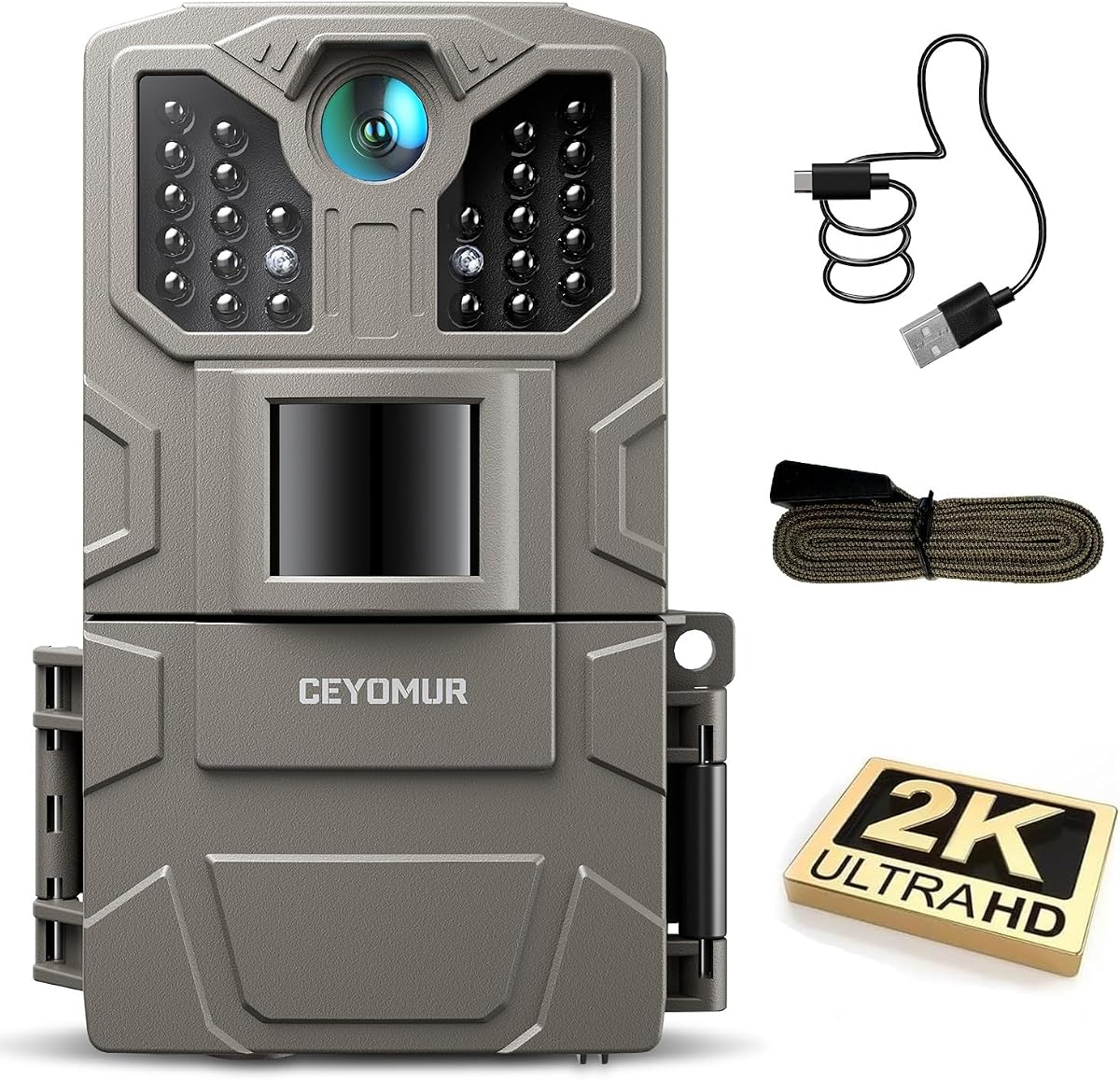
CEYOMUR Trail Camera
4.0Editor score
Integrated side controls for faster setup
Bright 850nm night vision LEDs
IP66 waterproof extreme outdoor design
This guide compares ten top battery life trail camera models for 2026, evaluating power options, solar compatibility, and endurance for reliable outdoor
Selecting a trail camera with exceptional battery life is crucial for successful wildlife monitoring and property security. Long-lasting power ensures your device captures critical moments without frequent maintenance trips into the field.
We analyzed ten leading models based on power efficiency, solar compatibility, and real-world performance. Our comparison focuses on how each camera manages energy consumption to maximize uptime during extended deployment periods.
Each pick highlights specific power strengths and trade-offs to help you choose the right fit for your needs. Please note that pricing and availability can change frequently, so check current listings before purchasing.
4.0Editor score

4.3Editor score

4.2Editor score
This side-by-side comparison highlights the key power features and specifications of each model to help you understand their endurance capabilities and charging options at a glance.


The WOSPORTS Trail Camera stands out for its versatile power architecture, allowing users to choose between standard AA batteries, rechargeable lithium packs, or solar panels. This flexibility makes it ideal for long-term deployments where battery changes are difficult or costly. With a 4.3 rating, it balances performance and practicality effectively.
We may earn a commission when you buy through this link, at no additional cost to you.
Its efficient design supports extended outdoor monitoring by minimizing energy waste. The camera captures sharp 64MP images and smooth 4K HD videos, ensuring you do not miss critical wildlife moments. The 0.2-second trigger speed ensures fast action is recorded instantly without blur.
While the need to buy batteries and solar accessories separately adds initial cost, the long-term savings in disposable battery replacements are significant. Users appreciate the clear LCD screen for immediate feedback on settings and captured footage without needing to remove the SD card.
This camera is best suited for homeowners and wildlife enthusiasts who want reliable performance without being tied to a single power source. Its waterproof design and wide detection angle make it a robust choice for diverse outdoor environments.
The ability to swap between AA batteries, lithium packs, and solar panels ensures the camera keeps running even in locations far from maintenance access.
Capture crisp daytime images and detailed night vision footage with the high-quality optical lens, allowing for accurate species identification and activity tracking.
We may earn a commission when you buy through this link, at no additional cost to you.
The Moultrie Edge 3 Cellular offers a sophisticated approach to power management by integrating remote monitoring tools. You can check battery life directly from the app, allowing you to plan maintenance visits efficiently. Compatible with rechargeable lithium packs and solar panels, it supports months of dependable power.
We may earn a commission when you buy through this link, at no additional cost to you.
Its AI buck detection technology helps reduce false alerts, which in turn conserves battery by avoiding unnecessary photo or video transmissions. The auto-connect to four major carriers ensures reliable data delivery without manual SIM setup, saving time and energy during installation.
While cellular plans add an ongoing cost, the convenience of remote monitoring and targeted alerts justifies the investment for serious hunters. The 2-year warranty and built-in GPS further enhance its premium appeal for professional-grade surveillance.
This camera is ideal for those who prioritize data security and remote control. The ability to adjust settings and check battery status from home means you only travel when necessary, extending the operational life of your field gear.
Check battery levels and adjust settings from your phone, ensuring you never get caught off guard by a dead camera in the field.
Advanced AI filters out non-target activity, reducing unnecessary recordings and saving battery for important wildlife captures.
We may earn a commission when you buy through this link, at no additional cost to you.
The MAXDONE Solar Trail Camera excels in sustainable power with its built-in 6000mAh rechargeable lithium battery paired with high-efficiency solar charging. This combination provides uninterrupted power for outdoor use, eliminating the need for frequent battery replacements. Its 4.2 rating reflects strong performance in real-world testing.
We may earn a commission when you buy through this link, at no additional cost to you.
Designed for maintenance-free operation, this camera captures ultra-clear 64MP images and smooth 4K videos day and night. The 65ft low-glow infrared night vision ensures details are captured without disturbing wildlife. Its rugged IP66 design withstands rain, snow, and heat for long-term durability.
While it does not support cellular networks, the WiFi app control allows you to preview and download photos directly without removing the SD card. This local data storage protects privacy and simplifies access for users on the same hotspot network.
This model is perfect for eco-conscious users who want a truly set-and-forget solution. The integrated solar system ensures the camera remains active even in remote locations, making it a top choice for continuous wildlife monitoring without human intervention.
High-efficiency solar panels charge the built-in battery automatically, keeping the camera running continuously without manual battery swaps.
Store all photos and videos locally on the device, protecting sensitive data from external breaches and ensuring secure wildlife monitoring.
We may earn a commission when you buy through this link, at no additional cost to you.
The Meidase P70 combines high-speed performance with efficient power management to capture fast-moving wildlife without blur. It features a 0.1-second trigger speed that ensures you never miss a moment. Users praise its bright 100ft no-glow night vision, which delivers sharp footage without spooking animals.
We may earn a commission when you buy through this link, at no additional cost to you.
Power flexibility is a key strength, as the camera supports pairing with the Meidase SP350 Solar Panel for eco-friendly, non-stop operation. When paired with 8 AA batteries as a backup, it provides reliable performance even during cloudy periods. The H.264 video compression reduces file sizes for faster playback.
While it lacks built-in cellular connectivity, its local storage and waterproof design make it robust for standalone deployment. The 2.4-inch color display allows for intuitive on-site menu navigation and quick review of captured footage.
This camera is ideal for hunters who prioritize image clarity and speed. Its durable construction ensures it can withstand harsh weather, making it a solid investment for serious wildlife monitoring and home security.
Pair with a compatible solar panel to achieve unlimited power, reducing the need for battery changes in hard-to-reach locations.
H.264 compression minimizes file size without sacrificing quality, allowing more footage on your SD card and faster downloads.
We may earn a commission when you buy through this link, at no additional cost to you.
The WOSPORTS Mini Trail Camera offers a lightweight solution for discreet wildlife monitoring. Its compact camouflage body measures just 4.25 × 4.21 × 3.43 inches and weighs only 0.73lb. This makes it easy to conceal in outdoor environments without attracting attention from animals or people.
We may earn a commission when you buy through this link, at no additional cost to you.
Powered by only 4 AA batteries, its low-power design supports longer standby time for extended outdoor use. The 850nm infrared LEDs provide clear night vision images while reducing disturbance to wildlife. Users appreciate the simple setup and adjustable mounting strap for quick installation.
While it lacks solar charging capabilities, the low consumption rate ensures efficient battery usage during moderate activity periods. The 30MP high-resolution photos and Full HD 1080P videos deliver clear details suitable for observation and security monitoring.
This model is perfect for beginners or those needing a secondary camera for short-term surveillance. Its user-friendly operation and compact design make it an excellent choice for garden monitoring or backyard wildlife observation.
The small, lightweight build allows for easy concealment, ensuring natural wildlife behavior is captured without intimidation.
Optimized power consumption extends battery life between changes, making it suitable for remote placements with minimal access.
We may earn a commission when you buy through this link, at no additional cost to you.
The GardePro E5S prioritizes low-power, eco-friendly wildlife viewing with its non-cellular and non-wifi operation. This design minimizes energy use, allowing for fewer battery changes and zero disturbances to animals. Its 4.4 rating highlights strong performance in reliable outdoor conditions.
We may earn a commission when you buy through this link, at no additional cost to you.
Equipped with three PIR sensors, it enables a lightning-fast 0.1s trigger speed to capture moving deer wildlife. The camera supports the GardePro SP350 Solar Panel for continuous outdoor use, ensuring reliable power even in remote areas. Its rugged design withstands harsh weather with an IP66 waterproof rating.
While it does not offer remote connectivity, the straightforward operation reduces complexity and power drain. Users can retrieve the SD card to review captured footage, making it a simple solution for regular monitoring cycles.
This camera is ideal for those who value simplicity and longevity. The solar-ready feature and efficient design make it a great tool for long-term environmental research or property security without high maintenance costs.
By avoiding cellular data transmission, the camera consumes significantly less power, extending battery life and reducing operational costs.
Pair with the SP350 Solar Panel to achieve extended monitoring in remote areas where battery replacement is difficult or impractical.
We may earn a commission when you buy through this link, at no additional cost to you.
The CEYOMUR Trail Camera is designed for first-time users who prioritize easy operation and dependable performance. Its classic solid brown housing blends naturally into outdoor environments, making it ideal for wildlife monitoring. With clear controls, anyone can start using it in minutes without technical experience.
We may earn a commission when you buy through this link, at no additional cost to you.
Powered by 8 AA batteries, this camera captures crisp black and white nighttime images with 24pcs 850nm Infrared LEDs. The integrated design places lens, screen, and controls on one side for faster setup and convenient angle adjustments. Users appreciate the straightforward interface and time-lapse features.
While it lacks advanced connectivity options, its reliability in rain and dust makes it a practical choice for general outdoor use. The 2K video upgrade ensures vivid wildlife footage with more details and experience during recording sessions.
This camera is perfect for hunters and landowners seeking a no-frills, easy-to-use solution. Its durable construction and simple functionality make it a valuable tool for backyard use and basic wildlife observation.
All controls on one side simplify setup and adjustments in the field without needing to reposition the camera repeatedly.
Produces sharper images with less noise compared to 940nm LEDs, ensuring clear identification of animals even in total darkness.
We may earn a commission when you buy through this link, at no additional cost to you.
The WOSPORTS Mini 2 Pack Kit offers excellent coverage by allowing you to monitor multiple locations simultaneously. Each camera comes with a 16GB SD card included, making setup easier without needing to purchase additional accessories. The compact design helps it blend naturally into forests and gardens.
We may earn a commission when you buy through this link, at no additional cost to you.
Powered by only 4 AA batteries each, the low-power design helps extend standby time and reduces frequent battery changes during long-term monitoring. With 0.3-second trigger speed and 850nm infrared LEDs, it provides clear black-and-white nighttime images without disturbing wildlife.
While it does not include solar panels, the efficient consumption rate ensures extended operation between replacements. The simple setup includes adjustable mounting straps for quick installation on trees, posts, or fences for versatile placement options.
This kit is ideal for users needing broad surveillance on a budget. The included SD cards and compact design make it a practical choice for farm monitoring, property security, and outdoor observation projects.
Capture wildlife activity at different sites simultaneously, increasing your chances of spotting rare species or tracking animal movement patterns.
Low power consumption design extends battery life, ensuring fewer interruptions and less maintenance during outdoor deployment.
We may earn a commission when you buy through this link, at no additional cost to you.
The WOSODA Mini 4 Pack is designed for extensive outdoor monitoring with included batteries and SD cards for all four units. Each mini trail camera captures 30MP clear images and Full HD 1080P video during day and night. Its camouflage appearance helps it blend into the natural environment to avoid detection.
We may earn a commission when you buy through this link, at no additional cost to you.
With low power consumption and a 0.3-second trigger speed, these cameras ensure no details are missed while maintaining extended standby time. The compact design offers a sleek appearance that allows for discreet placement on trees or posts without drawing attention.
While managing four units requires careful battery maintenance, the included accessories make initial deployment straightforward. Users can set them up quickly for home security, property surveillance, or wildlife monitoring across large areas.
This kit is perfect for landowners needing wide-area coverage. The comprehensive package with included power and storage makes it a cost-effective solution for large-scale monitoring projects.
Cover extensive areas with four cameras included, allowing for complete property surveillance without additional hardware costs.
Included SD cards and batteries simplify the initial setup process, saving time and effort for immediate monitoring.
We may earn a commission when you buy through this link, at no additional cost to you.
The GardePro E5S 2-Pack offers dual high-resolution monitoring with 64MP photos and 1296P HD videos. Each camera supports the GardePro SP350 Solar Panel for continuous outdoor use, ensuring reliable power even in remote areas. Its non-cellular operation ensures minimal power use and zero disturbances.
We may earn a commission when you buy through this link, at no additional cost to you.
With three PIR sensors enabling a 0.1s trigger speed, you can capture fast-moving wildlife without blur. The cameras support SD cards up to 512GB for large storage needs, offering Motion playback and loop recording for flexible recording modes.
While batteries are not included, the solar compatibility helps extend operational life significantly. The rugged IP66 waterproof rating ensures durability in harsh outdoor conditions, making it a reliable tool for serious hunters.
This kit is ideal for users needing wide-area coverage with high image quality. The combination of speed, storage, and solar readiness makes it a powerful tool for professional wildlife monitoring and security.
Capture detailed 64MP photos across two locations, providing comprehensive visual data for tracking animal movements effectively.
Pair with the SP350 Solar Panel for continuous power, reducing maintenance needs in remote deployment locations.
We may earn a commission when you buy through this link, at no additional cost to you.
Choosing a trail camera with optimal battery life requires considering power sources, efficiency, and environmental conditions. Here are the key factors to evaluate before making a decision.
Trail cameras typically run on AA batteries, rechargeable lithium packs, or solar panels. AA batteries are widely available but require frequent replacement. Lithium packs offer higher capacity and longer life, while solar panels provide unlimited power in sunny locations. Select a system that matches your site's accessibility and sunlight exposure.
For remote sites, prioritize solar or lithium compatibility to minimize maintenance visits and ensure continuous monitoring.
Energy efficiency depends on trigger speed, detection range, and image resolution. Faster triggers and higher resolution consume more power. Look for models with sleep modes and optimized sensors that wake only when motion is detected to conserve energy.
Check estimated battery life ratings under typical use to avoid frequent replacements during deployment.
Solar-compatible cameras can operate indefinitely if placed in areas with adequate sunlight. Ensure the camera supports a compatible solar panel, either built-in or sold separately. Solar charging reduces long-term costs and environmental impact significantly.
Prioritize models with built-in solar inputs for seamless integration without extra hardware costs.
Weather resistance ensures the camera survives rain, snow, and extreme temperatures without power loss. Look for IP66 or higher ratings to guarantee protection against dust and water ingress. A sturdy shell prevents moisture damage that can drain batteries faster.
Choose a camera with a high waterproof rating to maintain performance in all seasonal conditions.
Cellular models transmit data remotely but consume more power than local storage options. Non-cellular models save energy by storing footage on SD cards for physical retrieval. WiFi or Bluetooth options allow local previews without high data usage.
Select local storage if battery conservation is a priority and you can access the camera periodically.
PIR sensors detect heat and motion. Advanced models use multiple sensors for better accuracy, reducing false triggers that waste power. A fast trigger speed ensures you capture animals without needing repeated shots, saving battery cycles.
Opt for cameras with efficient sensor technology that minimizes false positives and optimizes energy use.
Night vision uses infrared LEDs that consume power during low-light capture. 850nm LEDs provide brighter images but may glow, while 940nm LEDs are invisible but dimmer. Efficient LED management helps balance visibility and battery drain.
Choose the right night vision type based on your stealth requirements and available battery capacity.
Larger SD cards reduce the need for frequent retrieval. Video compression formats like H.264 reduce file sizes, saving storage and playback energy. Loop recording helps manage space by overwriting oldest files automatically.
Prioritize cameras with high storage limits and efficient compression to maximize uptime and reduce physical checks.
Mount your camera securely on a tree or post using the included straps, ensuring the lens is level and aimed at the desired path. Place it 3 to 4 feet high to capture wildlife effectively without obstruction. Ensure the camera is positioned to minimize direct sunlight on the lens to avoid glare and battery drain.
Insert fresh batteries or a charged lithium pack before deployment, and check the power indicator to confirm proper installation. Set the mode to standard or hybrid recording to balance performance with energy savings. Configure the time and date stamp for accurate tracking and reporting.
Periodically check the camera to clear debris from the lens and inspect the battery status. Avoid touching the lens with bare hands to prevent smudges. Store spare batteries in a dry place to maintain charge capacity and prevent leakage during storage.
A typical trail camera using AA batteries can last anywhere from two to six months depending on activity levels and settings. Solar-powered models can operate indefinitely with sufficient sunlight. Using lithium batteries or a solar panel significantly extends runtime.
Yes, trail cameras with solar panels store energy in their batteries during the day to power operation at night. The solar panel charges the internal battery while the camera operates normally in darkness. This ensures continuous monitoring without battery replacement.
Lithium AA batteries are best for longevity and performance in cold weather. Regular alkaline batteries work for short-term use but drain faster. Rechargeable lithium packs offer convenience for cameras that support them.
Yes, higher resolution video consumes more processing power and energy than standard definition. Setting the camera to record lower-resolution clips or using motion-activated recording helps conserve battery life.
Not all trail cameras are compatible with solar panels. Check if your model has a solar port or supports an external charging adapter. Some brands sell dedicated solar accessories designed for their specific cameras.
Reduce recording sensitivity to fewer false triggers, set longer recovery times, and use power-saving modes if available. Position the camera in areas with minimal wind or unnecessary motion to conserve energy.
Our top picks for battery life trail cameras include the WOSPORTS Trail Camera for its power flexibility, the Moultrie Edge 3 Cellular for remote monitoring, and the MAXDONE Solar Trail Camera for sustainable operation.
Prioritize your specific needs, such as solar compatibility for remote sites or rechargeable packs for convenience, to find the best match. The efficiency features in these models ensure your camera remains active for long periods.
Remember to verify current listings for any changes in stock and compatibility. Choosing the right power solution is key to successful and reliable wildlife monitoring projects.