
Channel Master TV Antenna Signal Strength Meter
3.9Editor score
Supports all ATSC TV frequencies
Displays RF signal and SNR
Built-in rechargeable battery
Finding the right cellular signal meter for antenna aiming is essential for installers and enthusiasts. A good device provides accurate readings to ensure optimal signal strength for your setup.
We compared ten diverse tools based on their frequency coverage, accuracy, and ease of use. Our list includes specialized RF meters, spectrum analyzers, and hybrid devices for various needs.
Each pick highlights key strengths and limitations to help you choose confidently. Prices and availability change frequently, so always verify current details before purchasing your equipment.
3.9Editor score

4.3Editor score

4.6Editor score
As an Amazon Associate we earn from qualifying purchases.
This side-by-side comparison highlights the unique capabilities of each selected device. Use this overview to quickly identify which tool matches your specific installation requirements.


The SureCall Five-Band RF Signal Meter is a professional tool designed for precise cellular booster installation. With a rating of 4.3 stars, users appreciate its reliability and focused frequency support.
We may earn a commission when you buy through this link, at no additional cost to you.
Its five band coverage ensures compatibility with PCS, Cellular, AWS, and LTE networks across various regions. The high receiving sensitivity of -110dBm allows for accurate detection of even weak signals during aiming.
While the battery life is decent at 2.5 to 3.5 hours, heavy users may find it requires frequent recharging. However, the rechargeable design and controllable backlight make it practical for most field work.
This device is ideal for installers who need a dedicated tool for cell boosters. It simplifies the aiming process by providing clear feedback on signal strength across critical frequency ranges.
Covers PCS, Cellular, AWS, and LTE to ensure versatile compatibility with major U.S. networks.
Features high sensitivity of -110dBm for precise detection of weak cellular signals during installation.
We may earn a commission when you buy through this link, at no additional cost to you.
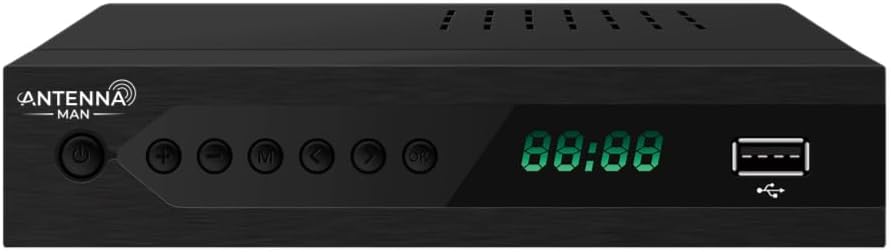
The Antenna Man Signal Meter offers a budget-friendly entry into signal testing for those focused on over-the-air TV reception. It functions primarily as a digital converter box with tuning capabilities.
We may earn a commission when you buy through this link, at no additional cost to you.
Its real-time signal strength display helps users quickly adjust antennas for the best picture quality. The plug-and-play nature makes it accessible for homeowners without technical expertise.
The rating of 3.8 suggests it may lack the robustness of professional tools. It is strictly limited to ATSC digital TV frequencies and does not support cellular or data bands.
Choose this if you are setting up a TV antenna and need a simple, affordable aid. It is not suitable for professional cellular signal aiming or booster installation projects.
Designed for plug-and-play use to make TV antenna alignment straightforward for non-technical users.
Provides immediate visual updates on signal quality to help fine-tune antenna positioning effectively.
We may earn a commission when you buy through this link, at no additional cost to you.
The Berkeley Varitronics Octopus 4G LTE Cellular Signal Meter is a top-tier tool for professional applications like EV charging stations and IoT deployment. With a 4.6 rating, it is trusted for its technical depth.
We may earn a commission when you buy through this link, at no additional cost to you.
It measures True RSRP, RSRQ, and RSSI without needing a SIM card or phone, simplifying the testing process for technicians. This design allows for pure signal analysis without device variables.
While it is priced higher than consumer meters, the precision and lack of subscriptions make it cost-effective for businesses. It supports all U.S. regional carriers ensuring broad utility in diverse environments.
Invest in this meter if you require precise LTE data for enterprise installations. It stands out as a reliable solution for complex wireless infrastructure needs.
Captures precise RSRP and RSRQ data essential for professional network optimization and planning.
Operates without SIM cards or external devices for faster and more accurate testing workflows.
We may earn a commission when you buy through this link, at no additional cost to you.
The RF Explorer Pro is a powerful spectrum analyzer that serves advanced users needing broad frequency analysis up to 6.1GHz. It combines a spectrum analyzer, power meter, and tracking generator in one device.
We may earn a commission when you buy through this link, at no additional cost to you.
Its 8-inch high-definition touchscreen makes viewing complex RF data easy. Tools like 2D/3D waterfall and GPS heatmap provide rich context for antenna tuning and interference analysis.
The modular design allows you to choose frequency ranges to suit specific needs. While versatile, it requires a learning curve for those unfamiliar with professional RF engineering concepts.
This device is perfect for engineers and technicians handling complex wireless environments. It offers deep insights that standard signal meters cannot provide for rigorous testing.
Integrates spectrum analysis and power metering to reduce the need for multiple devices on site.
Uses large color displays to visualize complex RF signals for easier interpretation during testing.
We may earn a commission when you buy through this link, at no additional cost to you.
The NetAlly AirCheck G3 Pro Kit is a comprehensive solution for testing Wi-Fi 6/6E and Bluetooth networks. It boasts a perfect 5-star rating due to its advanced validation capabilities for critical services.
We may earn a commission when you buy through this link, at no additional cost to you.
It includes an external directional antenna to help pinpoint physical locations of access points. Tri-band spectrum analysis ensures thorough coverage of the 2.4, 5, and 6GHz bands.
Features like automatic network topology mapping and remote collaboration save significant time during site surveys. However, its primary focus on Wi-Fi limits its utility for cellular signal aiming.
Select this kit if your work involves complex enterprise wireless networks. It is a premium tool for IT professionals who need detailed insights into local area connectivity.
Tests and troubleshoots Wi-Fi 6/6E networks with purpose-built hardware for reliable performance.
Rapidly identifies physical locations of network clients and access points using advanced detection.
We may earn a commission when you buy through this link, at no additional cost to you.
The Extech 480836 is designed for high frequency measurement of EMF from mobile phones and base stations. It offers a 4.3 rating for its reliability in safety-related assessments.
We may earn a commission when you buy through this link, at no additional cost to you.
Its non-directional isotropic probe measures signals from all directions simultaneously. This is useful for ensuring compliance with exposure limits rather than optimizing antenna direction.
Manual store and recall functions allow up to 99 sets to be saved for later review. It serves well for general RF presence checks rather than precise signal aiming.
Use this if you need to check EMF levels in an area. It is a practical tool for safety inspections but lacks cellular band specificity for installation tasks.
Uses a triaxial probe to capture RF energy from all angles for accurate environmental measurement.
Stores up to 99 manual readings for tracking signal variations over time easily.
We may earn a commission when you buy through this link, at no additional cost to you.
The MINI1300 Antenna Analyzer features a 4.3 inch TFT LCD touch screen for intuitive operation. It covers a broad frequency range from 0.1 to 1300MHz including HF, VHF, and UHF bands.
We may earn a commission when you buy through this link, at no additional cost to you.
It provides single point measurement and scanning modes for detailed antenna analysis. The SWR measurement range helps ensure efficient signal transfer between the antenna and transmitter.
Note that the firmware cannot be updated, so ensure the device meets your current needs before purchase. It remains a solid compact choice for hobbyists and technicians working on general antennas.
This analyzer is best for checking antenna resonance and efficiency. While not specifically for cellular signal aiming, it helps tune hardware used in those systems effectively.
Offers a large 4.3 inch touch display for easy navigation and reading of complex data.
Includes scanning and TDR modes to detect faults and measure SWR efficiently on site.
We may earn a commission when you buy through this link, at no additional cost to you.
The SA6 6GHz Portable Spectrum Analyzer combines analysis and signal generation in one handheld unit. It supports frequencies up to 6200MHz and includes tracking generators for component testing.
We may earn a commission when you buy through this link, at no additional cost to you.
Its 3.2 inch color touchscreen allows for real-time spectrum viewing. The device is lightweight at 380g making it easy to carry during field visits for wireless signal assessment.
Connectivity via USB Type-C allows for real-time logging and analysis on a PC. Battery life ranges from 3 to 4 hours depending on usage intensity.
Ideal for engineers who need both testing and generation capabilities. It is versatile enough for analyzing 2G through 4G LTE signals in various environments.
Switches between spectrum analyzer and signal generator modes instantly for versatile RF testing.
Designed as a lightweight device to reduce technician fatigue during extended on-site work.
We may earn a commission when you buy through this link, at no additional cost to you.
This SA6 handheld variant offers a robust housing designed for technicians working in tight spaces. It covers the same 35 to 6200MHz range with a stable tracking generator output.
We may earn a commission when you buy through this link, at no additional cost to you.
Its real-time spectral measurement includes fast scans for quick assessment of RF environments. The device supports various wireless technologies including WiFi and LTE for broad testing needs.
The package includes cables and a stylus to start analyzing immediately. It is energy efficient and built to withstand regular field use.
Choose this version for its convenience and ruggedness. It is well-suited for maintenance teams and hobbyists who need quick and reliable RF diagnostics.
Delivers rapid scans below 100ms to assess RF environments quickly without delay.
Comes with necessary accessories like cables and stylus for immediate out-of-box use.
We may earn a commission when you buy through this link, at no additional cost to you.
The Channel Master TV Antenna Signal Strength Meter is a dedicated tool for optimizing over-the-air TV reception. It displays both RF signal level and Signal to Noise Ratio for precise alignment.
We may earn a commission when you buy through this link, at no additional cost to you.
It supports all ATSC TV frequencies within the USA ensuring broad compatibility with local broadcasts. The color touchscreen makes it easy to read data during outdoor installation.
Includes a protective carrying case and stylus for convenience. The built-in rechargeable battery ensures it is ready for extended use without extra power packs.
This is the best option for homeowners focusing on TV antenna setup. While it lacks cellular support, it excels at its intended task of OTA alignment.
Shows Signal to Noise Ratio to help optimize for stable and clear picture quality.
Comes with a protective case and stylus to keep the device safe and easy to operate.
We may earn a commission when you buy through this link, at no additional cost to you.
Selecting the right signal meter depends on your specific goals whether it is cellular boosting or TV setup.
Ensure the meter covers the frequencies used by your cellular provider. For modern 4G and 5G, you need support for LTE and specific bands like 700MHz or AWS.
Check the device specs to confirm it matches the bands of your target network.
High sensitivity allows you to detect weak signals which is crucial when aligning directional antennas. Look for devices that can read low dBm values accurately.
Higher sensitivity ensures better precision when searching for the optimal signal direction.
Installations often happen outdoors or in dim lighting. A backlight or color touchscreen helps you see readings without obstruction.
Choose a display that is easy to read in varying environmental conditions.
Long working time is important for professionals who need to operate the device for hours. Rechargeable batteries are often more cost-effective than disposable ones.
Select a device with sufficient battery life for your typical work duration.
Some advanced analyzers offer USB or PC connectivity for data logging. This can be vital for documenting network performance over time.
Look for connectivity options if you need to record and analyze data later.
Plug-and-play devices simplify the setup process. Avoid tools that require complex configuration if you need quick results.
Prioritize intuitive interfaces to reduce setup time in the field.
Tools that work across all major carriers provide more versatility. This is especially useful if you service clients with different network providers.
Ensure the device does not rely on a specific SIM card or phone.
Lightweight devices reduce fatigue during long install days. Consider the weight and form factor if you carry the tool for hours.
Choose a compact design that is easy to transport and handle on ladders.
Start by connecting your antenna to the device's input port. Turn on the meter and select the frequency band relevant to your target network or provider.
Point the antenna toward the expected tower direction and watch the signal strength values change. Adjust the angle slowly until you reach the peak reading.
After use, store the device in its protective case to avoid physical damage. Keep it charged and ensure the screen and probe remain clean for accurate future readings.
Most installers look for high sensitivity and support for specific LTE bands. This ensures the device can detect weak signals accurately during installation and testing.
Professional meters often do not require a SIM card. They analyze the raw RF signals directly which simplifies testing and allows for broader carrier support.
No standard TV signal meters are limited to broadcast frequencies. Cellular meters cover different bands like PCS and AWS so you need a dedicated tool.
Battery life varies by device but many offer between 2 to 5 hours. Rechargeable models are convenient to reduce the need for disposable batteries.
SNR stands for Signal to Noise Ratio and it indicates quality. Higher SNR values generally mean a clearer connection and better performance for data transfer.
Some advanced spectrum analyzers support frequencies used by 5G networks. Verify the frequency range to ensure it covers the new mmWave or sub-6GHz bands.
Choosing the right meter depends on balancing performance and specific application. The SureCall Five-Band offers excellent value while the Berkeley Varitronics provides top-tier professional precision.
Prioritize features like frequency coverage and sensitivity to ensure you get the most accurate results. The right tool makes antenna aiming much faster and more efficient.
Always check current availability and details before purchasing as models change frequently. Investing in a quality meter pays off in professional and reliable installations.