
SONICAKE EQ Pedal, 10-Band Equalizer Guitar Bass Effects Pedal – Tone Group
4.4Editor score
100% Analog 10-Band
Adjustable Gain Range
Precise Tone Control
Discover the top bass equalizer pedals for tone shaping. This guide compares ten top models for features, build quality, and sound performance.
Finding the right bass equalizer pedal is crucial for sculpting your low end and cutting through the mix. A good pedal offers precise frequency control, durable construction, and transparent signal processing to enhance your tone without coloration.
We compared ten leading models based on band count, gain range, build quality, and user feedback. Each entry in this list represents a distinct approach to EQ shaping, from compact five-band units to versatile ten-band solutions for professionals.
Every pick highlights key strengths, ideal use cases, and potential trade-offs to help you decide. Prices and availability may change, so verify details on the product page before purchasing to ensure you get the best value.
4.4Editor score

4.6Editor score

4.6Editor score
The following table provides a side-by-side comparison of all ten products featured in this guide. Review the key specifications, build materials, and unique features to determine which unit aligns best with your specific tonal requirements and budget constraints.




The BOSS GEB-7 stands out as a reliable and professional tool for bassists needing precise tone shaping. Rated 4.6 stars, this pedal delivers full range response and excels with five- and six-string basses. Its design prioritizes signal integrity and practical usability on stage.
We may earn a commission when you buy through this link, at no additional cost to you.
Its seven-band graphic EQ provides ample control over critical frequencies, allowing players to carve out their unique sound. The level control knob enables the pedal to function as a boost or cut device, offering versatility for live performances. The compact size fits easily on most pedalboards.
While it offers fewer bands than ten-band alternatives, the selected frequencies are well-chosen for bass applications. Some users might miss wider frequency coverage, but the focused approach ensures ease of use without clutter. The trade-off is acceptable for those seeking simplicity and reliability.
This pedal is ideal for bassists who value consistency and durability over extreme customization. Whether you play electric-acoustic or standard electric bass, the GEB-7 delivers professional results. It is a strong choice for gigging musicians needing a trustworthy EQ solution.
The GEB-7 is optimized to handle the extended low end of five and six string basses effectively. This ensures that low notes remain clear and defined without muddiness or signal loss.
The level control knob allows the pedal to boost signal levels or cut specific frequencies. This dual functionality makes it suitable for both soloing and mixing into a band setup.
We may earn a commission when you buy through this link, at no additional cost to you.
The SONICAKE EQ Pedal offers exceptional value with its 10-band analog equalizer design. Rated 4.4 stars, it provides professional sound shaping capabilities at a budget-friendly price point. The adjustable gain range ensures it works well with various instruments and setups.
We may earn a commission when you buy through this link, at no additional cost to you.
Its 11 sliders allow for precise and quick adjustments, making it easy to shape tone on the fly. The true bypass circuit maintains a clean signal path when disengaged, preserving your original tone. This feature is crucial for maintaining signal integrity in complex pedal chains.
While it requires a separate power supply, which is not included, the pedal operates reliably with standard 9V sources. Some analog circuits might introduce minimal noise, but this is often negligible in live environments. The convenience and affordability outweigh minor potential drawbacks for most users.
This pedal is perfect for home recording, practice, or gigging musicians needing versatile EQ control without breaking the bank. It suits both guitarists and bassists looking for extensive frequency control. Consider it if you prioritize value and broad frequency coverage.
The pedal offers a +/-15dB adjustable gain range for each band, allowing deep cuts or significant boosts. This flexibility helps tailor tone for diverse musical styles and instrument types.
True bypass ensures that when the pedal is off, the signal passes through untouched. This prevents tone suck and maintains the natural sound of your instrument when effects are not needed.
We may earn a commission when you buy through this link, at no additional cost to you.
The Donner EQ Pedal combines convenience and performance with its compact 10-band graphic equalizer design. Rated 4.4 stars, it is built with selected components to ensure high sound quality. Its versatile design makes it suitable for any music style or instrument type.
We may earn a commission when you buy through this link, at no additional cost to you.
The +/-15dB adjustable gain range allows for detailed tone shaping, enhancing your instrument's presence in a mix. The aluminium-alloy construction ensures durability for road use, while the true bypass guarantees a transparent signal path. This means no popping or buzzing when engaging or disengaging the pedal.
Like many budget options, it does not include a power adapter, which is a minor inconvenience for buyers. The lack of LED indicators for slider positions might require memory to recall settings, but this does not affect performance. These trade-offs are minor given the overall value and build quality.
This pedal is an excellent choice for home recording, practice, and live gigs where portability is key. Musicians who need precise frequency control without a large footprint will appreciate its design. It offers a reliable solution for refining tone in any setting.
The sturdy aluminium-alloy housing protects the internal electronics and ensures long-lasting road performance. This robust construction makes it suitable for frequent travel and gigging environments.
True bypass technology ensures the signal remains fully intact during transmission. This prevents signal loss and preserves your original tone when the pedal is not active.
We may earn a commission when you buy through this link, at no additional cost to you.
The Rowin Bass Equalize Pedal is designed for bassists seeking minimal footprint without sacrificing control. Rated 4.2 stars, it features a 5-band graphic EQ with a master volume knob. Its compact design makes it one of the smallest bass EQ options on the market.
We may earn a commission when you buy through this link, at no additional cost to you.
The adjustable range of +/-18dB provides substantial headroom for sculpting tone across key frequencies. The aluminum alloy build ensures sturdiness, making it reliable for gigging. The true bypass switch maintains signal integrity, preserving the natural tone of your bass when off.
While it lacks the frequency resolution of 10-band pedals, the selected bands cover essential ranges for bass tone shaping. The missing power supply adapter is a standard consideration for buyers, so plan accordingly. These limitations are acceptable for those prioritizing space and simplicity.
This pedal suits players with limited pedalboard space who still want dedicated tone control. It is ideal for bassists focusing on core frequencies like low end and mids. Consider it if compact size and durable construction are your top priorities.
The +/-18dB range allows for significant tone modifications, helping tailor sound for specific mix needs. This flexibility ensures you can boost presence or cut problematic frequencies effectively.
The master volume knob allows for precise output level adjustment alongside frequency shaping. This helps balance the overall volume when using the pedal as a boost or cut tool.
We may earn a commission when you buy through this link, at no additional cost to you.
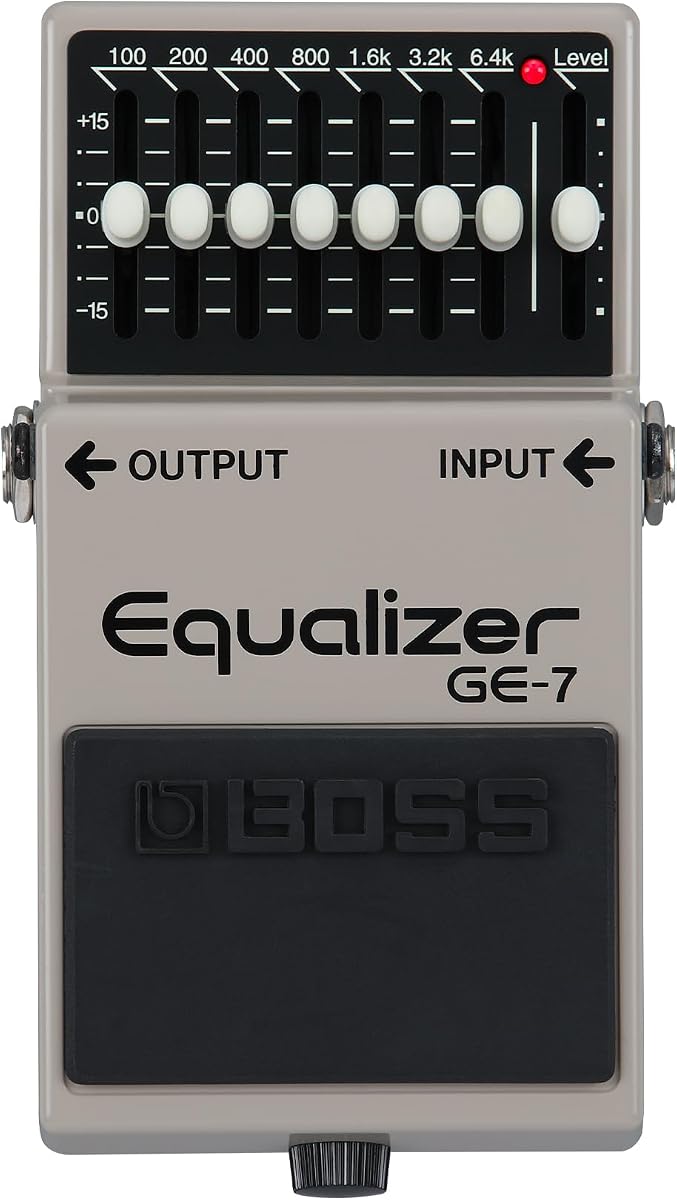
The BOSS GE-7 Equalizer is renowned for its high quality and versatility, earning a 4.8 star rating. While tailored for guitarists, it remains a viable option for bassists needing specific frequency adjustments. Its seven bands of adjustable EQ sliders provide precise control over tonal shaping.
We may earn a commission when you buy through this link, at no additional cost to you.
The frequencies are optimized for guitar tones, but they can serve bass applications where mid-range control is needed. The level slider allows for overall volume balancing, which is useful for lead boosting. BOSS backs this pedal with a five-year warranty, ensuring long-term reliability and support.
Bassists should note that the frequency bands may not cover the lowest ranges as effectively as bass-specific units. However, the robust build and brand reputation make it a trusted choice. The trade-off is minor if you value reliability and general-purpose EQ capabilities.
This pedal is ideal for musicians needing a durable and reliable EQ solution with strong brand backing. It suits players who want proven quality and warranty protection. Consider it if you prioritize brand trust and long-term support in your gear.
The seven bands are set to specific frequencies like 100 Hz and 6.4 kHz, tailored for guitar tone. While versatile, these settings may not cover the deepest bass frequencies as well as specialized pedals.
BOSS provides a five-year warranty with this pedal, reflecting confidence in its durability. This coverage offers peace of mind for professional and casual users alike.
We may earn a commission when you buy through this link, at no additional cost to you.
The STRICH 10-Band EQ Pedal is crafted for musicians needing a durable and portable tone-shaping solution. Rated 4.2 stars, it features ten independent frequency bands and a master band for precise adjustments. The compact design and balanced weight make it ideal for frequent travel.
We may earn a commission when you buy through this link, at no additional cost to you.
Its +/-12dB gain range covers most adjustment needs for bass and guitar applications. The aluminum alloy construction ensures sturdiness, protecting the pedal from accidental drops during transit. The true bypass design maintains transparent tonal quality without unwanted noise or signal loss.
While the 12dB range is slightly less than some competitors, it suffices for most tone shaping scenarios. The lack of a power adapter requires you to supply your own 9V source. These minor constraints are acceptable given the portability and build quality offered.
This pedal suits touring musicians and home players who value a reliable and compact EQ. The independent bands allow nuanced adjustments for diverse tonal needs. Consider it if portability and durable construction are critical factors.
Designed with ideal weight and size for travel, this pedal fits easily in gig bags. The durable construction ensures it remains intact even after accidental drops or rough handling.
True bypass ensures the signal remains intact without noise or loss of intensity. This preserves your instrument's natural tone when the pedal is disengaged.
We may earn a commission when you buy through this link, at no additional cost to you.
This Bass EQ Pedal is designed to serve electric bassists needing precise tone shaping for live stages. It features dedicated frequency centers like 62.5Hz and 4kHz for detailed sound adjustment. The metal shell construction ensures durability for frequent gigging and rehearsals.
We may earn a commission when you buy through this link, at no additional cost to you.
The +/-18dB gain adjustment allows tightening low-end response or boosting mids for mix presence. True bypass switching minimizes tone coloration, keeping the signal clean when off. It suits various genres including rock, metal, funk, and jazz, making it versatile for diverse playing styles.
While the 5-band setup limits frequency resolution, it covers essential ranges for live sound clarity. The lack of a power adapter is standard, so ensure you have a compatible 9V supply. These trade-offs are minor compared to the benefits of compactness and durability.
This pedal is excellent for bassists needing reliable equipment for live stage performances. Its robust design ensures it withstands the rigors of touring. Consider it if you need a compact and versatile EQ solution for gigs.
The +/-18dB range allows significant tweaks to low-end and mid frequencies. This helps players adapt to different room acoustics and band mixes effectively.
Built with a rugged metal housing, this pedal withstands frequent use and transport. The sturdy construction ensures longevity for professional and amateur bassists alike.
We may earn a commission when you buy through this link, at no additional cost to you.
This Bass EQ Pedal offers straightforward tone shaping for electric bassists at an affordable price. It features five frequency centers and +/-18dB adjustment per band for precise sound control. The full metal shell ensures durability, while the indicator lights clearly display the working state.
We may earn a commission when you buy through this link, at no additional cost to you.
True bypass design provides a transparent tone without noise or frequency loss during transmission. The metal housing adds solidity, making it suitable for regular practice or gigs. These features combine to offer reliable performance for budget-conscious musicians seeking functional EQ tools.
While the limited bands might not suit complex needs, they cover essential frequencies for most styles. The absence of a power adapter requires you to supply a separate unit. These minor issues do not detract from the overall value and utility it provides.
This pedal is perfect for players needing basic EQ adjustments without extra cost. It suits beginners or those looking for a secondary EQ option. Consider it if you want a solid and functional unit on a budget.
Indicator lights clearly show the working state of the pedal at all times. This helps prevent confusion during live performance or practice sessions.
The full metal shell offers a solid build that withstands daily use. This robust design ensures the pedal remains reliable over extended periods.
We may earn a commission when you buy through this link, at no additional cost to you.
The MXR Ten Band EQ is a premium tool designed for professional tone shaping and studio use. Rated 4.6 stars, it offers precise control over 10 different frequencies with a +/-12dB range. Its 18-volt operation provides increased headroom, ensuring clean performance even at high signal levels.
We may earn a commission when you buy through this link, at no additional cost to you.
The two outputs allow running separate signal chains, offering flexibility for complex setups. High visibility LEDs ensure you can see the status clearly, even under direct sunlight. These features make it ideal for touring musicians needing reliable and versatile EQ capabilities.
While the price is higher than budget models, the quality and flexibility justify the cost for pros. The larger footprint may limit space on small pedalboards, so plan accordingly. These trade-offs are acceptable for those prioritizing performance and studio-grade functionality.
This pedal is best suited for musicians needing advanced features and durable construction. It works well for recording and live stage use. Consider it if you demand professional-grade reliability and precise tone control.
The 18-volt operation ensures increased headroom for clean signal processing. This reduces distortion and maintains clarity even at higher volume levels.
Dual outputs allow you to run two separate signal chains independently. This flexibility enables more complex routing and sound design possibilities.
We may earn a commission when you buy through this link, at no additional cost to you.
The EROK EQ Pedal combines a 10-band equalizer with a standalone boost circuit in one unit. Rated 4.3 stars, it covers a wide frequency range from 31.25Hz to 16kHz for precise tone shaping. The dual independent footswitches allow flexible working modes like EQ only or combined boost.
We may earn a commission when you buy through this link, at no additional cost to you.
Its low noise circuit ensures signal integrity, eliminating unwanted hum during transmission. The LED slider indicators provide quick visibility on dark stages, enhancing practical usability. This multi-function design makes it suitable for both studio tracking and live performances.
The learning curve might be steep for beginners due to multiple controls and settings. Also, the missing power adapter requires you to source one separately. These minor challenges are manageable for those needing versatile EQ and boost capabilities in one device.
This pedal suits players who want consolidated control over EQ and signal boosting. The sturdy aluminum construction ensures durability for touring. Consider it if you need an all-in-one solution for customized pedalboard setups.
Separate footswitches allow EQ and boost to be used independently or combined. This flexibility helps match studio needs or live stage performance requirements.
Built-in LED indicators for sliders ensure quick visibility on dim stages. This practical feature aids fast adjustments during live performances.
We may earn a commission when you buy through this link, at no additional cost to you.
Choosing the right bass equalizer pedal requires understanding your tonal needs and budget. This guide outlines key factors to consider before purchasing a new unit.
Band count determines how many frequency points you can adjust. Five-band pedals offer simplicity for basic tone shaping, while ten-band units provide precise control for complex needs.
Consider your preferred level of detail when selecting between 5, 7, or 10 bands.
Ensure the pedal covers the frequencies relevant to your instrument. Bass-specific pedals focus on low end, while guitar pedals optimize mid and high ranges for clarity.
Check frequency centers to confirm they align with your tuning and tonal requirements.
The +/- gain range affects how much you can boost or cut frequencies. Wider ranges allow drastic tone changes, while limited ranges suit subtle adjustments.
Look for at least 12dB to 18dB flexibility for versatile performance.
Metal shells and durable construction ensure longevity on the road. Pedals built with high-quality materials withstand drops and frequent use better than plastic alternatives.
Prioritize solid construction for touring or regular gigging environments.
True bypass ensures the signal remains transparent when the pedal is off. This prevents signal loss or tone suck in your chain when effects are disengaged.
Always verify the switching type to maintain your instrument's natural tone.
Many pedals require a separate 9V DC power supply, which is often not included. Check voltage polarity and connector size before purchasing a power adapter.
Factor in the cost of a compatible power supply when budgeting for your purchase.
Price often correlates with features and brand reputation. Premium pedals come with better support and longer warranties for peace of mind.
Invest in a reputable brand to ensure long-term reliability and customer service.
Compact pedals save space on tight boards, while larger ones may offer more control. Measure your pedalboard before selecting a unit to ensure a proper fit.
Balance size constraints with the functionality you need for your setup.
Place the pedal early in your signal chain to shape the raw tone before effects. Connect input and output cables securely, ensuring polarity matches your power supply requirements.
Start with all sliders flat, then adjust frequencies incrementally to find the desired sound. Avoid extreme cuts to preserve signal integrity and prevent unwanted noise.
Store the pedal in a dry environment and use dust covers if not on a board. Clean the knobs and sliders with a dry cloth to maintain smooth operation over time.
Beginners should start with a simple 5-band pedal to understand tone shaping without overwhelm. These units are affordable and cover the essential frequencies needed for basic adjustments.
Many bass pedals can work on guitar, though frequency ranges may vary. A 10-band EQ offers enough flexibility for both instruments in most cases.
Five bands are sufficient for basic tone shaping, while ten bands allow detailed control. Choose based on how much customization you want for your sound.
True bypass maintains signal transparency when the pedal is off. It is crucial for preserving tone integrity and preventing signal loss.
Most pedals require a 9V DC power supply with center negative polarity. Always check the manual to ensure compatibility before purchasing an adapter.
Yes, EQ pedals can correct tone issues by boosting or cutting specific frequencies. They are useful tools for refining sound during recording or practice.
A combo pedal like the EROK offers versatility for boost and EQ. It simplifies your board but may require more setup time.
Analog pedals often sound warmer, while digital offers precision. Choose based on your preference for tone character versus feature set.
The ten products highlighted in this guide offer a range of options from budget to premium choices. Whether you need simplicity or detailed control, there is a unit that fits your needs.
Prioritize build quality and frequency range to ensure long-term value. Consider your playing environment and whether portability or advanced features matter most.
Always verify current pricing and availability before purchasing. Checking official product pages helps ensure you get the latest model and best support.