
ST to LCU Fiber Optic Adapter
5.0Editor score
Secure bayonet coupling
Compact panel design
Low cost entry
This guide compares the top 10 LC to ST fiber optic adapters for network upgrades, testing, and legacy system integration based on performance and value.
Selecting the right LC to ST fiber optic adapter is crucial for maintaining signal integrity during network transitions. These connectors bridge legacy ST infrastructure with modern LC systems, ensuring reliable data transmission across various environments.
We evaluated ten highly-rated adapters based on insertion loss, durability, connector type, and real-world application suitability. Our analysis covers single-mode and multimode options, focusing on reliability for professional and enterprise use cases.
Each pick highlights specific strengths like low loss, compact design, or hybrid compatibility. Prices and availability fluctuate, so verify current listings before purchasing to ensure you get the best value for your specific setup needs.
5.0Editor score

4.8Editor score

5.0Editor score
The following table provides a side-by-side comparison of all ten selected adapters, detailing their connector types, fiber modes, wavelengths, and key specifications to help you choose the right fit.
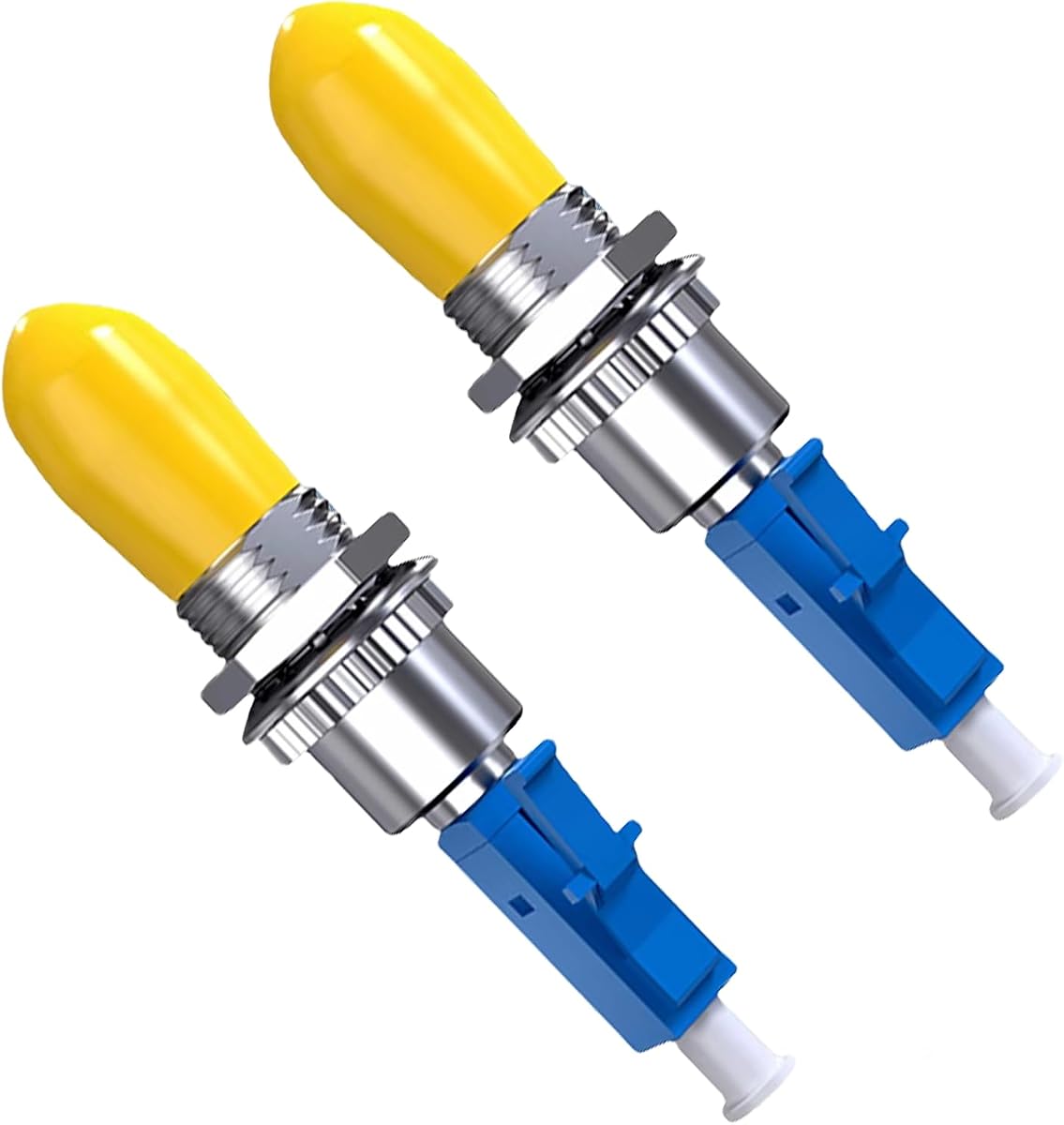
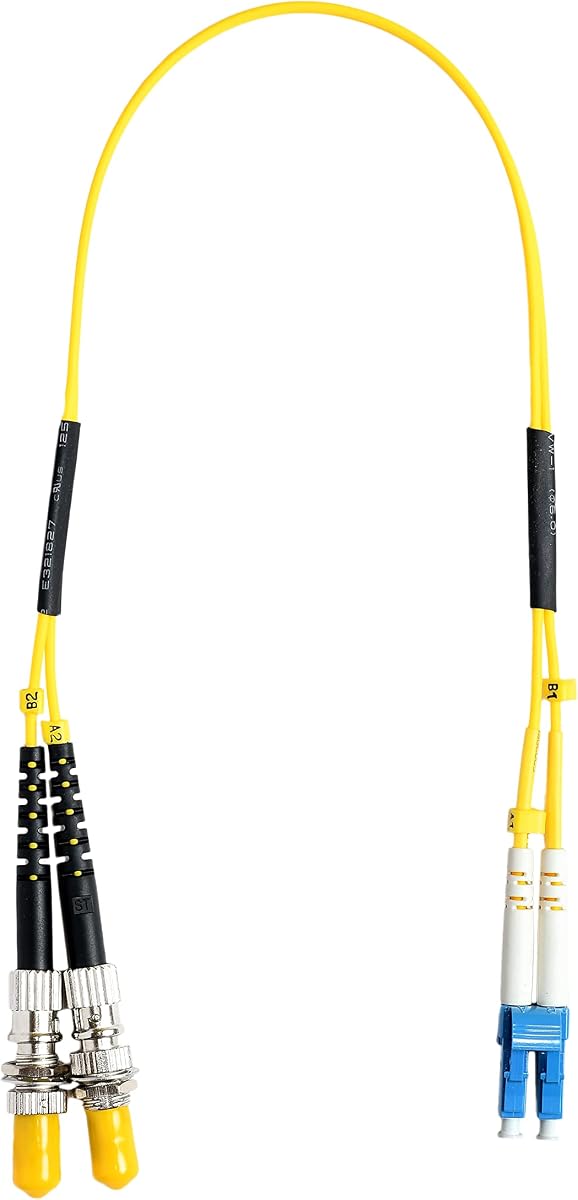


This 3-pack adapter offers reliable single-mode conversion with excellent optical performance. Its 4.8 rating reflects consistent low insertion loss and robust construction suitable for professional fiber optic projects.
We may earn a commission when you buy through this link, at no additional cost to you.
The adapter supports 1310nm and 1550nm wavelengths with insertion loss under 0.2dB. Ceramic and metal sleeves ensure stability in demanding environments while maintaining precise alignment for high return loss.
The package includes three adapters, providing backup options for larger installations. Users appreciate the flame retardancy and high impact strength, ensuring safety and longevity in commercial telecommunications applications.
Network engineers and maintenance teams should consider this adapter for cost-effective legacy upgrades. Its performance metrics and durability make it a top choice for optical power meter connections and general fiber optic infrastructure.
Low insertion loss ensures minimal signal attenuation across critical wavelengths for stable data transmission.
Ceramic sleeves and metal housings provide structural stability and corrosion resistance in various conditions.
We may earn a commission when you buy through this link, at no additional cost to you.
Rated 5.0, this adapter provides precise LC to ST hybrid connections for single-mode fiber testing. It excels in optical power meter continuity checks and visual fault locator applications with minimal signal loss.
We may earn a commission when you buy through this link, at no additional cost to you.
The LC male to ST female design supports 1310nm and 1550nm wavelengths effectively. Ceramic sleeves guarantee precise alignment while the lightweight construction ensures convenient handling during field testing or installation tasks.
Insertion loss and return loss specifications meet strict industry standards. The adapter’s design prevents light wave sensitivity issues, ensuring accurate measurements and stable connections across diverse fiber optic network scenarios.
Field technicians and network maintenance professionals will find this adapter invaluable for testing setups. Its reliability and performance metrics make it a preferred tool for ensuring continuity and signal integrity in optical networks.
Optimized for visual fault locators and power meters to ensure accurate fiber network diagnostics.
Seamlessly bridges LC and ST connectors with hybrid optical fiber adapter design.
We may earn a commission when you buy through this link, at no additional cost to you.
This 1ft LC to ST adapter cable simplifies connections with a factory-terminated duplex assembly. It delivers reliable single-mode transmission with a safe low smoke zero halogen jacket and tight buffered construction.
We may earn a commission when you buy through this link, at no additional cost to you.
The cable supports 1310nm wavelengths and is tested for link and return loss. Its compact zip cord design saves space in high-density panels while ensuring flexibility for short-range network patching needs.
Factory termination ensures consistent performance without requiring onsite polishing or tools. The LSZH material adds safety by reducing harmful emissions in enclosed spaces where fiber optic cable installation occurs.
Data centers and LAN technicians should use this for quick, secure patching between LC and ST ports. Its duplex configuration and safe materials make it ideal for short connections in office and enterprise networks.
LSZH jacket reduces toxic emissions during fires, enhancing safety in enclosed network spaces.
Pre-tested cables ensure reliable performance out of the box without additional assembly.
We may earn a commission when you buy through this link, at no additional cost to you.
Designed for multimode systems, this 1ft cable connects LC to ST ports efficiently with a 62.5/125 duplex fiber. It supports 850nm wavelengths, making it perfect for short-range data center applications.
We may earn a commission when you buy through this link, at no additional cost to you.
The standard zip cord jacket provides flexibility while maintaining durability. Its LC male to ST female configuration simplifies legacy upgrades and patching tasks within small networks needing minimal cable length.
Rated 4.8, users appreciate its reliable performance for basic connectivity needs. The 1ft length avoids clutter while ensuring enough slack for easy connection adjustments in tight equipment racks.
IT staff and network installers should consider this for multimode patching projects. Its cost-effective design and standard specifications make it a practical choice for short-distance optical connections.
Specifically built for 62.5/125 multimode systems, ensuring correct light transmission.
Short length reduces cable clutter in dense server and equipment racks.
We may earn a commission when you buy through this link, at no additional cost to you.
This premium kit provides six interchangeable connectors for FC, SC, ST, and LC types. It works with both single and multimode fibers, offering a one-stop solution for diverse OTDR testing and maintenance needs.
We may earn a commission when you buy through this link, at no additional cost to you.
Metal housings ensure corrosion resistance and structural stability during use. With insertion loss under 0.2dB and return loss over 45dB, the kit delivers reliable signal transmission and high measurement accuracy for professionals.
The plug-and-play design minimizes downtime by requiring no tools or complex setup. Users can quickly switch between adapter types for seamless testing, making it efficient for field installations and repairs.
Network maintenance teams and engineers should invest in this kit for comprehensive fiber testing. Its versatility and durability make it ideal for FT deployment, construction, and ongoing network maintenance tasks.
One kit covers multiple connector types to eliminate need for additional purchases.
Low loss and high return loss ensure accurate measurements during critical testing.
We may earn a commission when you buy through this link, at no additional cost to you.
This budget-friendly adapter enables reliable conversion between legacy ST and modern LC connectors. It maintains signal integrity through precision ceramic sleeves and offers vibration-resistant threaded connections for demanding environments.
We may earn a commission when you buy through this link, at no additional cost to you.
The design features a simple push-pull LC side and bayonet-style ST connections for tool-free installation. Its compact size fits standard adapter panels, optimizing space in high-density patch panels and wall outlets.
Fully compliant with telecommunications standards, it ensures seamless interoperability with existing hardware. The robust metal housing ensures stable transmission and long-term reliability without compromising performance or network speed.
Enterprises looking to extend legacy equipment lifespan should choose this adapter. Its reliable, cost-effective design makes it ideal for mixed-infrastructure deployments requiring seamless integration between old and new systems.
Compact design ensures maximum use of available adapter panel space.
Threaded ST coupling keeps connections secure during movement or vibration.
We may earn a commission when you buy through this link, at no additional cost to you.
This adapter cable offers LC female to ST male connectivity, perfect for specific polarity requirements in multimode systems. Rated 4.9, it provides reliable performance with standard zip cord duplex construction for flexibility.
We may earn a commission when you buy through this link, at no additional cost to you.
Supporting 850nm wavelengths, it suits short-distance network links effectively. The 1ft length prevents cable clutter in tight spaces while maintaining standard multimode fiber core specifications for compatibility.
The standard duplex jacket ensures durability without sacrificing bend radius. It is factory terminated to guarantee consistent link loss and return loss performance across all installed network segments.
Technicians needing reverse polarity connectors should consider this option. It simplifies patching in environments where standard LC male to ST female cables are unavailable or impractical to use.
LC female to ST male supports specific network topology requirements.
Tailored for 62.5/125 core multimode systems with standard wavelength support.
We may earn a commission when you buy through this link, at no additional cost to you.
This singlemode cable provides LC male to ST female duplex connectivity for 1310nm wavelengths. It supports standard 9/125 fiber cores, making it a straightforward solution for short-distance optical patching tasks.
We may earn a commission when you buy through this link, at no additional cost to you.
The zip cord duplex jacket offers flexibility while maintaining core alignment. Rated 4.3, it performs consistently in standard office environments where fixed length connections are required without excess cabling.
Factory termination ensures reliable performance with minimal setup effort. The 1ft length is ideal for patch panels where space is limited, providing a clean and organized network connection layout.
Network administrators managing singlemode infrastructure should utilize this for quick links. Its simplicity and standard specifications make it a reliable choice for cost-effective network patching requirements.
Supports 9/125 singlemode cores with 1310nm wavelength for precise data transmission.
Reliable zip cord design ensures consistent performance and flexibility.
We may earn a commission when you buy through this link, at no additional cost to you.
This hybrid converter features extremely low insertion loss as low as 0.04dB at 1550nm. It uses UPC contacts for stable single-mode connectivity, ideal for optical power meters and red light pen tests.
We may earn a commission when you buy through this link, at no additional cost to you.
Rated 4.8, the adapter supports 9/125μm fibers with both 1310nm and 1550nm bands. Its design ensures minimal signal attenuation, making it highly effective for precise measurements in broadband and FTTH deployments.
The ST plug to LC socket configuration simplifies patch cord pigtail connections. Its reliable performance helps technicians verify network continuity and signal strength without worrying about excessive loss or reflection.
Field technicians working on FTTH or CATV systems should select this adapter. Its precision metrics and hybrid functionality ensure accurate testing and stable connections across optical network equipment.
Insertion loss as low as 0.04dB ensures minimal signal degradation.
Ideal for optical power meters and red light pen continuity checks.
We may earn a commission when you buy through this link, at no additional cost to you.
This singlemode cable features LC female to ST male duplex connections for 1310nm wavelengths. It supports 9/125 fiber cores and uses standard zip cord construction for reliable performance in patch panels.
We may earn a commission when you buy through this link, at no additional cost to you.
The 1ft length ensures minimal cable clutter while providing sufficient reach for network ports. Rated 4.6, it delivers consistent link loss and return loss performance for stable optical network connections.
Factory termination guarantees precise alignment and reduces setup complexity. The design helps technicians quickly connect legacy ST equipment to modern LC interfaces without needing custom cable assembly.
Network operators needing reverse polarity singlemode links should use this adapter. Its reliable specs and compact design make it an efficient choice for short-distance connections in professional setups.
Designed specifically for 9/125 singlemode fiber with 1310nm wavelength support.
LC female to ST male configuration supports specific reverse polarity topology needs.
We may earn a commission when you buy through this link, at no additional cost to you.
Selecting the right adapter involves understanding fiber type, connector compatibility, and performance metrics.
Ensure the adapter matches your fiber mode: single-mode (9/125) for long distances or multimode (62.5/125) for short-range links. Using the wrong mode causes signal loss.
Check the product data to confirm the adapter supports your specific fiber core diameter and transmission type.
Verify whether your setup requires LC to ST male or female configurations. Mismatched polarity prevents physical connection and data transmission.
Select adapters with clear male-to-female or female-to-male designations to ensure secure fits.
Look for insertion loss below 0.2dB and return loss above 45dB to maintain signal integrity. High loss indicates poor quality or misalignment.
Review product specs to confirm optical performance meets your network's speed and distance requirements.
Confirm the adapter supports your operational wavelength, typically 850nm for multimode or 1310/1550nm for single-mode systems. Incorrect wavelength support degrades data rates.
Check the product data to verify the adapter handles the necessary bands for your network equipment.
Ceramic sleeves and metal housings improve durability and corrosion resistance. High-quality materials extend adapter lifespan in demanding environments.
Prioritize adapters with robust construction for industrial or outdoor applications where physical stress is common.
Match the adapter to your task—testing equipment needs low loss, while general patching may prioritize cost and size. Different scenarios demand specific performance levels.
Choose adapters optimized for your specific use case to ensure reliable performance.
Consider how many adapters come in the pack. Larger sets offer better value for bulk installations or backup needs in large networks.
Review product details to see if a 2-pack, 3-pack, or kit suits your project scope.
UPC or APC end faces affect return loss and compatibility. Ensure the adapter matches your existing cable end face type to avoid mismatches.
Confirm the UPC or APC rating in the product specs to ensure correct interface pairing.
Inspect the adapter and connector end faces before installation to remove dust or debris that may cause signal loss or damage. Use appropriate fiber cleaning tools to ensure a clean connection.
Align the connector pins with the adapter ports and push firmly until the coupler clicks or locks securely. Avoid excessive force that could crack ceramic sleeves or misalign fiber cores.
Store unused adapters in protective cases and avoid exposing them to extreme temperatures or moisture. Regular inspections of optical performance help maintain reliable data transmission over time.
LC and ST connectors differ in physical shape and coupling mechanisms. LC adapters use a push-pull latch, while ST adapters use a bayonet twist. This guide compares adapters that bridge these two types seamlessly.
No, single-mode adapters are designed for 9/125 fibers, while multimode requires 62.5/125 or 50/125. Using the wrong adapter type causes high signal loss and network failure.
Use an optical power meter to measure signal before and after the adapter. The difference represents insertion loss, which should stay below 0.2dB for reliable performance.
Most LC to ST adapters are plug-and-play and require no tools. Just align connectors and secure them. Some professional kits may include cleaning tools for optimal performance.
High-quality ceramic adapters can last decades in stable environments. Durability depends on handling frequency and exposure to dust or moisture, so proper maintenance extends their life.
No, APC adapters have angled end faces for higher return loss, while UPC faces are flat. Mixing them can damage connectors and degrade signal quality.
Yes, provided the fiber mode and wavelength match the network. Adapters with low insertion loss support Gigabit and higher speeds without significant data degradation.
Keep them in protective cases away from dust, moisture, and extreme heat. This prevents contamination of connector faces and maintains performance over time.
The Poyiccot 3-Pack, ST to LCU 2-Pack, and Sabary Kit lead in performance, value, and versatility respectively. Each offers reliable solutions for different network needs and testing scenarios.
Prioritize matching fiber modes, wavelengths, and connector polarity to ensure seamless connectivity. Selecting the right adapter prevents signal loss and installation challenges during network upgrades.
Prices and availability change frequently. Always check current listings to confirm compatibility before purchasing for your specific fiber optic infrastructure.