
ELEGOO UNO R3 Smart Robot Car Kit V4 with Camera
4.5Editor score
Live FPV camera view
Obstacle avoidance sensors
Rechargeable battery included
Discover the top electronics kits for teens in 2026. This guide compares 10 hands-on STEM projects including Arduino robots and soldering kits to help learners
Finding the right electronics kit for teens involves balancing complexity with engagement. Good kits introduce coding, circuits, and problem-solving without overwhelming young minds. They should offer clear instructions and reusable parts that grow with the learner.
We compared ten highly rated kits based on project variety, component quality, and educational value. Each selection supports different learning styles from no-solder beginners to advanced coders. Our list covers robots, sensors, and functional builds like speakers.
Each pick highlights key features, pros, and cons to help you choose wisely. We focus on safety, durability, and community support for troubleshooting. Please note that prices and stock levels change frequently on retailer sites.
4.5Editor score

4.7Editor score
4.8Editor score
The following table provides a quick side-by-side look at all ten featured kits. It highlights core specifications to help you compare capabilities at a glance.


This kit stands out as a top choice for serious teen learners due to its massive component count and guided lessons. It carries a strong rating from users who appreciate the depth of projects included. The focus on structured learning helps students progress smoothly from basics to complex builds.
We may earn a commission when you buy through this link, at no additional cost to you.
The Mega board provides significantly more memory and pins than standard boards, allowing for larger and more complex projects without hitting limits. Users can build RFID systems, environmental monitors, and interactive displays all in one box. The pre-soldered modules reduce setup time and frustration for beginners.
While the kit is large and costs more than basic options, the value lies in its longevity and depth. Teens won't outgrow this kit quickly because it supports advanced coding and hardware combinations. The organized storage ensures parts remain accessible for future modifications and experiments.
This kit is best for teens who want to invest in a long-term STEM hobby. It suits coding clubs and advanced classroom units where depth matters. We recommend it for motivated learners ready to explore beyond simple LED blinks.
The Mega board offers more memory and pins for larger builds.
Structured lessons guide users from simple to complex projects.
We may earn a commission when you buy through this link, at no additional cost to you.
This kit is an excellent entry point for teens new to electronics. It offers a balanced mix of components and guidance without overwhelming complexity. The high user rating reflects satisfaction with its ease of use and educational value.
We may earn a commission when you buy through this link, at no additional cost to you.
Users can start with simple LEDs and move to RFID access and motor control. The UNO board is standard but sufficient for most beginner and intermediate projects. Pre-soldered modules let learners focus on wiring and coding rather than assembly struggles.
The kit includes a power supply and battery options which simplifies testing. However, those needing more pins or memory might eventually outgrow the board. For most teens, this provides a solid foundation without extra costs.
Choose this kit for families or classrooms needing a reliable starter set. It works well for weekend projects and coding clubs. It is a strong pick for learners who want to build many different types of projects.
Pre-soldered modules reduce setup time and frustration.
Includes RFID, sensors, and motor control components.
We may earn a commission when you buy through this link, at no additional cost to you.
This kit combines robotics and coding into a fun, drivable project. It includes a camera for live video and sensors for autonomous movement. The rating shows teens enjoy the interactive nature of this build.
We may earn a commission when you buy through this link, at no additional cost to you.
Building the chassis is guided by keyed connectors to minimize wiring errors. Programming with Arduino IDE allows teens to customize driving logic and reactions. The Wi-Fi module enables remote control and video streaming.
The battery is rechargeable but needs charging between long sessions. Teens should have adult support for initial assembly. The project is more complex but very rewarding for those interested in robotics.
This kit is ideal for teens who want a tangible robot project. It suits STEM classes and maker challenges. We recommend it for learners ready to step into robotics and control systems.
Onboard camera provides a live video feed for control.
Sensors allow obstacle avoidance and line tracking.
We may earn a commission when you buy through this link, at no additional cost to you.
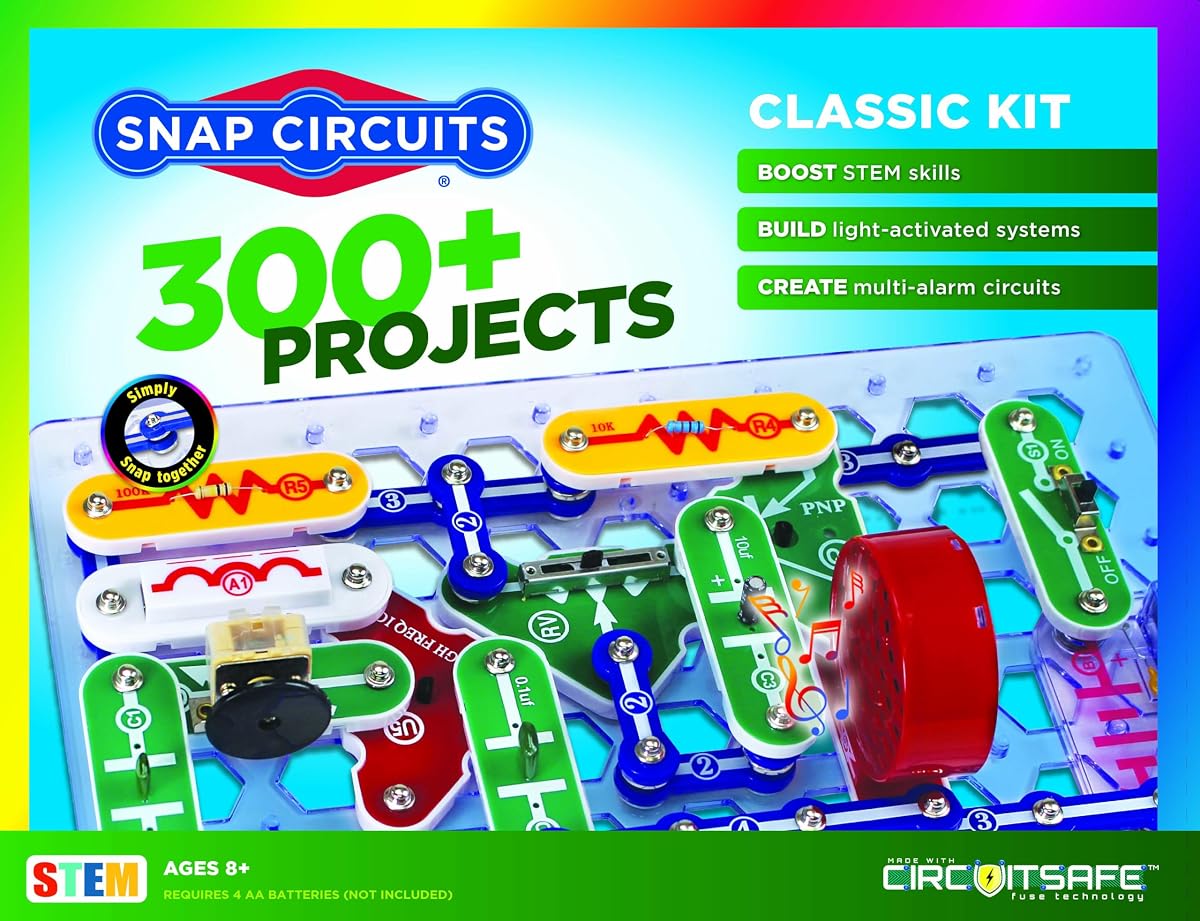
This classic kit is perfect for teens who want to understand circuits without coding. It uses snap-on parts to make building quick and safe. The high rating reflects its reliability and educational value.
We may earn a commission when you buy through this link, at no additional cost to you.
Teens can build radios, alarms, and games using the included manual. The pieces snap easily onto a grid, eliminating the need for tools. It introduces electrical engineering concepts in a fun way.
The limitation is that it does not include coding or programmable elements. Some teens may want to move to microcontrollers later. However, for pure circuit learning, it is unmatched in simplicity.
Choose this for beginners or as a supplementary tool. It is great for classrooms and family projects. We recommend it for teens who want to build physical electronic devices easily.
Snap-on parts require no tools or soldering.
Over 300 projects are possible with included parts.
We may earn a commission when you buy through this link, at no additional cost to you.
This kit allows teens to build a working speaker they can use daily. It focuses on soldering skills which are valuable for electronics enthusiasts. The rating is moderate but reflects the practical utility of the build.
We may earn a commission when you buy through this link, at no additional cost to you.
Teens will learn about amplifier circuits and component placement. The board comes pre-soldered to simplify some steps. After assembly, they can play music via Bluetooth or USB.
The kit requires basic soldering skills which may be tricky for absolute beginners. Some users note variable module versions. However, the result is a usable project that fits well in a room.
This is a great gift for teens interested in practical electronics. It works well for high school STEM classes. We recommend it for learners ready to practice soldering on a real device.
Focuses on building soldering skills and circuit understanding.
Creates a functional speaker for daily use.
We may earn a commission when you buy through this link, at no additional cost to you.
This kit offers a simpler entry path to Arduino projects with clear PDF tutorials. It includes enough parts for 22 guided lessons. The rating shows users appreciate its simplicity and organization.
We may earn a commission when you buy through this link, at no additional cost to you.
Teens can learn logic by making LEDs blink and controlling motors. The solderless design means no tools are needed. It includes a fan blade and remote for fun experiments.
It has fewer projects than the Mega or standard UNO kits. Some teens might want more components for advanced builds. However, for learning basic logic it is efficient and easy.
Choose this for learners who want to start quickly. It is good for home use or short classroom units. We recommend it for those on a tighter budget.
Plug-in modules make wiring easy for beginners.
Focuses on digital input output and motor control.
We may earn a commission when you buy through this link, at no additional cost to you.
This kit focuses on building a speaker with a dynamic light show. It is designed for those with basic soldering skills. The high rating shows satisfaction with the visual impact of the build.
We may earn a commission when you buy through this link, at no additional cost to you.
Teens will assemble a PCB with 10-LEDs that pulse with music. The manual uses photos to guide every step. The result is a vibrant speaker that looks and sounds great.
It requires soldering which may be a barrier for some. The design is simple compared to advanced kits. But for visual learners it offers a rewarding hands-on project.
Select this for teens who love visual tech. It is good for workshops and DIY enthusiasts. We recommend it for those who want a colorful electronic project.
LEDs create a synchronized light show with music.
High-clarity manual ensures smooth assembly.
We may earn a commission when you buy through this link, at no additional cost to you.
This kit lets teens build a Theremin which is a unique electric instrument. It focuses on science and engineering concepts like capacitance. The rating shows it is fun for curious learners.
We may earn a commission when you buy through this link, at no additional cost to you.
Teens can create music by waving hands around electric fields. The breadboard design means no soldering is required. It includes batteries and a colorful manual to guide assembly.
The Theremin is a niche instrument compared to robots or sensors. Some teens may prefer more practical electronics. However, it offers a distinct creative outlet for music and physics.
Choose this for teens interested in sound and physics. It works well as a science project. We recommend it for learners who want something different from standard kits.
Explores capacitance to create sound waves.
Allows teens to build a unique musical instrument.
We may earn a commission when you buy through this link, at no additional cost to you.
This kit is designed for teens who already own an Arduino board. It offers 37 different modules to expand their projects. The rating shows users love the variety of inputs available.
We may earn a commission when you buy through this link, at no additional cost to you.
Teens can add motion light sound and touch sensors easily. The modules are pre-wired for easy integration. It is perfect for customizing robots or environmental monitors.
It does not include a controller or wires so existing parts are needed. This makes it less suitable for absolute beginners. But for those ready to build custom systems it is excellent.
Select this for teens ready to expand existing kits. It is great for advanced projects. We recommend it for learners who want specific sensor variety.
Adds motion light sound and touch inputs.
Compatible with UNO MEGA and ESP32 boards.
We may earn a commission when you buy through this link, at no additional cost to you.
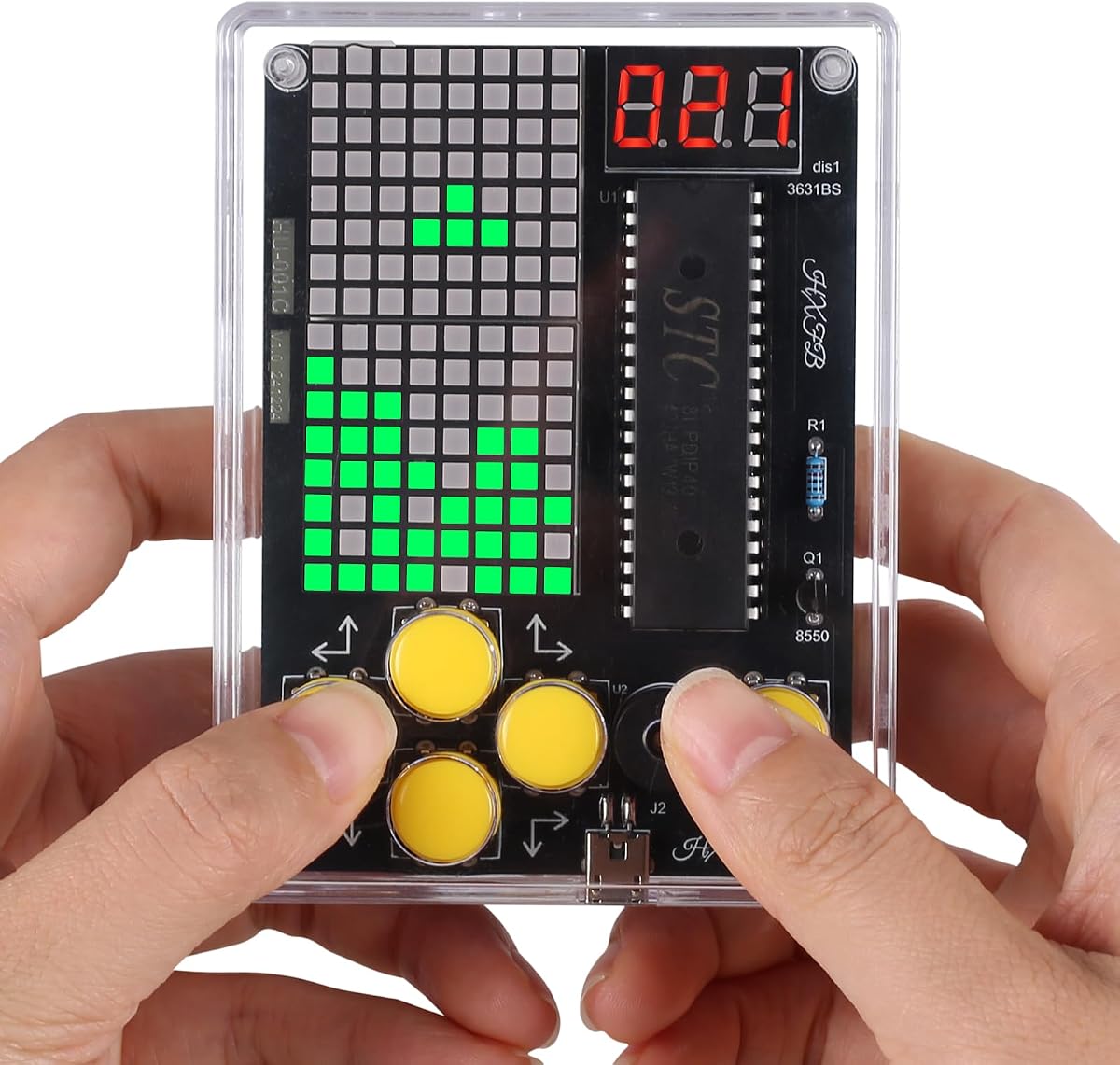
This kit combines game fun with electronics assembly for teens. It offers three difficulty levels to match skill. The rating reflects satisfaction with its hands-on approach.
We may earn a commission when you buy through this link, at no additional cost to you.
Teens build a device with seven interactive functions. Video guidance supports the assembly process. It is designed for teens 15 plus and adults who want structured practice.
The kit is limited to seven functions compared to full microcontrollers. It is more about soldering practice than coding. But it is engaging for those who like gaming.
Choose this for teens who want game-focused projects. It is good for workshops. We recommend it for those ready to practice soldering with video help.
Builds a device with seven distinct game modes.
Three difficulty levels suit different experience levels.
We may earn a commission when you buy through this link, at no additional cost to you.
Selecting the right kit depends on the teen's current skills and interests. This guide breaks down key factors to consider before purchasing.
Teens range from total beginners to advanced coders. A good starter kit should match their comfort level with tools. If they have never soldered, choose a snap or breadboard kit. If they know coding, look for microcontroller-based kits.
Pick a kit that matches their current experience to avoid frustration.
Some kits offer dozens of projects while others focus on one build. Teens who want to learn many concepts need a high variety count. Those who prefer mastering one project may prefer a specialized robot.
Choose a kit with enough projects to keep them interested over time.
Electronics kits either focus on code or hardware assembly. Arduino-based kits teach programming logic along with circuits. Snap circuits focus purely on electrical engineering concepts without coding. Decide what they want to learn more.
Match the kit focus to their interest in programming or circuits.
Quality components ensure projects work reliably and last. Cheap parts may fail causing frustration. Look for kits from trusted brands like ELEGOO or SNAP CIRCUITS that have good reviews.
Invest in quality components to avoid early failures.
Some kits involve soldering hot irons or complex assembly. Others are tool-free. Teens under 15 may need adult supervision for soldering. Ensure the kit matches their safety readiness and supervision available.
Ensure the kit matches their safety readiness and supervision.
Teens may want to expand their builds later. Kits with modular designs allow adding more parts later. Standard boards like Arduino are compatible with many future modules. This keeps the learning path open.
Choose a modular kit that allows future growth.
Clear instructions and online tutorials are vital for self-learners. Some kits include PDFs videos and community forums. Poor documentation can halt progress. Look for detailed manuals and active support.
Look for detailed manuals and active support for troubleshooting.
Prices vary from budget to premium. More expensive kits often include more parts and better docs. Evaluate value based on longevity and learning depth. Sometimes a higher upfront cost saves money later.
Evaluate value based on longevity and learning depth.
Always read the manual before starting any build. Organize parts using boxes to prevent loss. Ensure you have enough workspace and light for assembly.
Keep components dry and stored properly to prevent damage. Clean wires and modules after use to avoid dirt buildup. Return parts to labeled containers after every session.
Update software and drivers if using computer-based kits. Follow safety rules for soldering and batteries. Ask for help if unsure about connections or code.
The SNAP CIRCUITS Classic is ideal for beginners who want tool-free fun. For coding beginners, the ELEGOO UNO Starter Kit offers clear steps without soldering. Both are safe and easy to start with.
Some kits require basic soldering like the Bluetooth speaker kits. Others use snap-on parts or breadboards that do not need tools. Check the product description to confirm before buying.
Yes, kits with microcontrollers allow advanced coding. The ELEGOO Mega kit offers memory and pins for complex projects. Teens can modify code to create custom solutions.
Small builds may take one hour while complex kits take a weekend. Projects with many parts require more time. Planning sessions in advance helps avoid rushing.
Many kits are designed for classrooms and coding clubs. They come with guides suitable for group use. Teachers appreciate the structured lessons and component lists.
Most reputable sellers support missing parts. Contact the seller or manufacturer with your order number. Keep your manual handy to identify the part number quickly.
Yes, kits with controllers need a PC or laptop to upload code. Check system requirements before purchasing. Most kits work with Windows and Mac OS.
We reviewed ten kits ranging from simple snap circuits to complex robot cars. The Mega 2560 kit stands out for depth while SNAP CIRCUITS offers simplicity. Consider what interests your teen most before picking.
Prioritize kits that match their current skills and future goals. A balanced approach with fun and learning ensures they keep going. Quality parts and clear instructions help avoid frustration.
Remember to check current availability and prices before buying. Products change stock often on retailer sites. We hope this guide helps you find a perfect STEM gift.