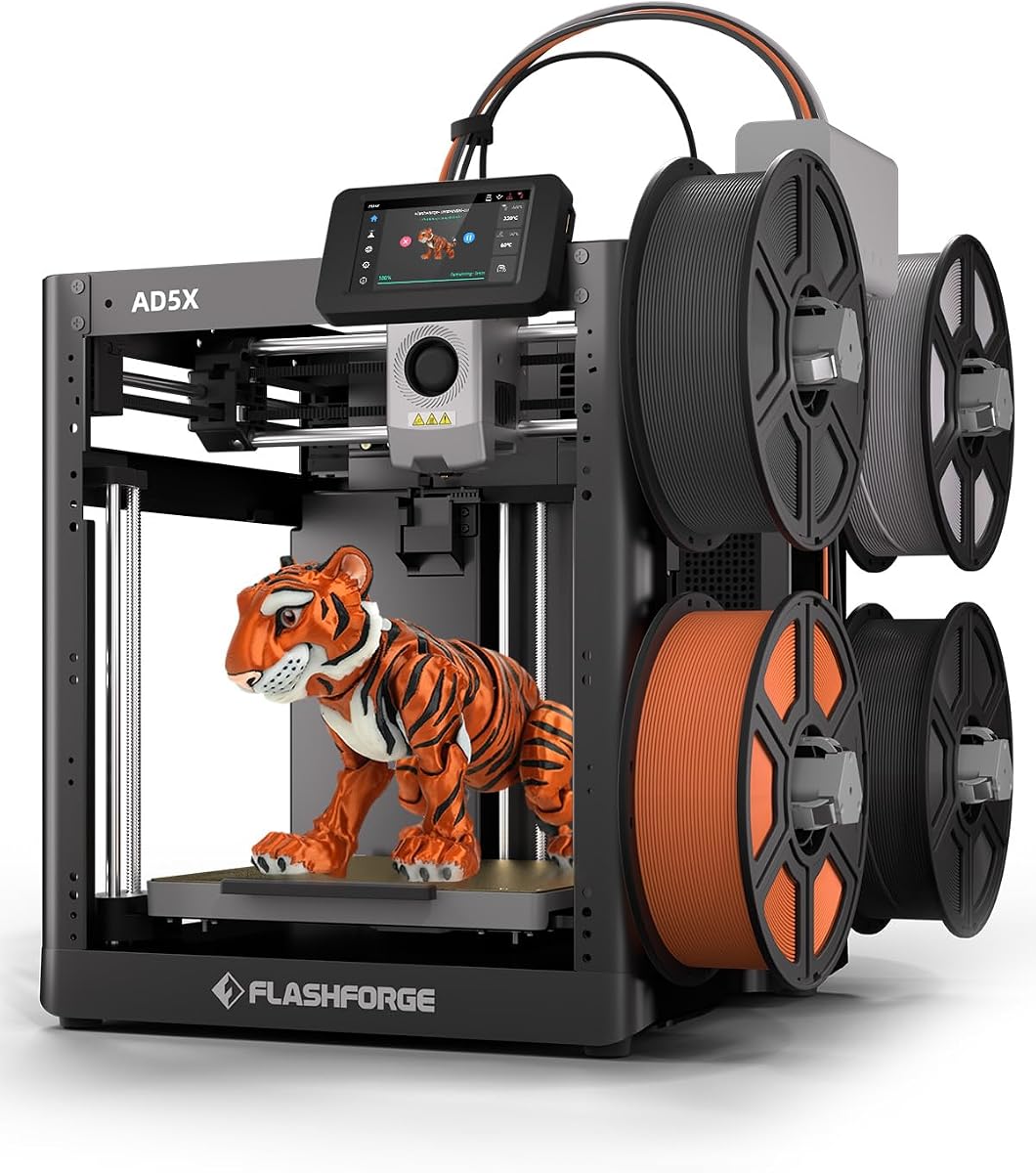
FLASHFORGE AD5X Multi-Color
3.9Editor score
600mm/s high-speed printing
Vivid multi-color printing support
1-Click auto leveling feature
Discover the top 3D printers for fast printing speed. This guide compares ten high-speed models to help you find the fastest reliable machine for your 3D
Modern 3D printing has evolved beyond slow hobbyist machines into powerful tools capable of rapid prototyping and production. Speed is now a critical factor for makers and professionals alike. Choosing the right high-speed 3D printer ensures you spend less time waiting and more time creating intricate designs and functional parts.
This comprehensive guide evaluates ten leading 3D printers known for their exceptional printing speeds. We analyzed technical specifications such as acceleration rates, max travel speeds, and extruder capabilities. Our focus remains on models that balance velocity with accuracy, ensuring your prints remain precise even at high velocities.
Each pick in this list showcases unique features tailored to different user needs and budgets. From budget-friendly options to premium professional machines, there is something for everyone. Please note that availability and specific configurations may change, so always verify details before making a final purchasing decision.
3.9Editor score

4.5Editor score

4.5Editor score
The following table provides a side-by-side comparison of the top ten 3D printers selected for their fast printing speeds. Each entry highlights key specifications to help you quickly identify which model best fits your specific production requirements and workspace constraints.



The Bambu Lab P1S stands out as a top contender for those seeking fast printing speeds without sacrificing quality. With a rating of 4.5, it delivers exceptional performance right out of the box. Its enclosed design and automation features make it ideal for both beginners and experienced users who need reliability.
We may earn a commission when you buy through this link, at no additional cost to you.
This printer boasts speeds up to 500mm/s with an acceleration of 20000mm/s², allowing you to complete projects in a fraction of the time compared to standard machines. The automatic bed leveling system ensures consistent first layers, while the enclosure supports engineering-grade filaments like ABS and ASA without warping issues.
While the P1S is highly capable, it requires an external AMS module for multi-color printing, which adds to the overall cost. Additionally, the learning curve for advanced settings might be slightly steep for absolute beginners, though the intuitive software mitigates this concern significantly for most users.
If you prioritize speed and versatility, the Bambu Lab P1S is the recommended choice. It balances performance with ease of use, making it a strong investment for anyone looking to upgrade their 3D printing capabilities to a professional level quickly and efficiently.
The P1S achieves lightning-fast speeds thanks to its optimized motion system and precise motor control. This ensures that even complex prints are finished rapidly while maintaining high dimensional accuracy and surface quality.
The fully enclosed body retains heat effectively, which is crucial for printing with materials like ABS and ASA. This feature prevents warping and ensures consistent results, making the printer suitable for a wider range of applications.
We may earn a commission when you buy through this link, at no additional cost to you.
The FLASHFORGE AD5X offers an impressive array of features at a budget-friendly price point, making it accessible for many hobbyists. With a speed of up to 600mm/s and multi-color support, it aims to provide high performance without the high cost often associated with fast printers.
We may earn a commission when you buy through this link, at no additional cost to you.
Its CoreXY structure supports rapid movement while maintaining stability during prints. The 1-Click Auto Leveling feature simplifies the setup process, ensuring that users can start printing quickly. Additionally, the 300°C direct drive extruder allows for a wide range of materials including specialized filaments.
Despite its strengths, some users report inconsistencies in print quality and software experience compared to more established brands. The rating reflects these mixed experiences, suggesting that while the hardware is capable, the ecosystem might require more tinkering to achieve optimal results consistently.
For those on a budget who still want fast speeds and multi-color options, the AD5X is a compelling option. It is best suited for users who are willing to troubleshoot minor issues to unlock its full potential and enjoy vibrant, rapid 3D prints.
This printer proves that high-speed 3D printing does not have to break the bank. Its competitive price makes it an attractive entry point for those looking to experiment with rapid prototyping and multi-color designs.
Supporting up to 4 colors simultaneously, the AD5X opens up new creative possibilities. Users can create complex, colorful models without the need for manual filament swaps or complex post-processing steps.
We may earn a commission when you buy through this link, at no additional cost to you.
The Snapmaker U1 redefines fast 3D printing with its unique toolchanger system and multi-material capabilities. Its high rating reflects its ability to deliver professional-grade results quickly. This machine is built for serious users who need to print functional parts and prototypes with speed and precision.
We may earn a commission when you buy through this link, at no additional cost to you.
With a toolchanging mechanism that takes only 5 seconds, the U1 minimizes downtime during multi-color or multi-material prints. The rigid CoreXY motion system ensures speeds up to 500mm/s are maintained without sacrificing stability. This makes it ideal for workshops where efficiency is paramount.
The main drawback is the premium price tag, which may be prohibitive for casual hobbyists. Additionally, the advanced features require a certain level of technical understanding to utilize effectively. However, for professional creators, the efficiency gains often justify the investment.
If you need a machine that excels in speed and versatility for professional applications, the Snapmaker U1 is unmatched. Its ability to switch tools rapidly and handle diverse materials makes it a powerhouse for rapid production and complex model fabrication.
The patented SnapSwap system allows for near-instantaneous tool changes. This eliminates the long purging times typical of multi-extruder systems, saving both material and time during every print job.
Combining rigid and flexible materials in a single print is seamless with the U1. This capability enables the creation of functional prototypes with integrated support structures and complex geometries previously impossible to print quickly.
We may earn a commission when you buy through this link, at no additional cost to you.
The Bambu Lab P2S Combo brings together speed and multi-color functionality in a sleek package. With a high rating of 4.7, it promises reliability and performance. This model is designed for users who want the fastest speeds without compromising on the ability to print in multiple colors seamlessly.
We may earn a commission when you buy through this link, at no additional cost to you.
Featuring an AMS 2 Pro, the printer handles multi-material tasks effortlessly while maintaining speeds up to 600mm/s. The adaptive airflow system ensures that cooling is optimized for every layer, leading to crisp overhangs and consistent surface finishes. This level of automation is rare in fast printers.
The cost of the combo can be a barrier for those just starting out. Additionally, the proprietary ecosystem might limit compatibility with certain third-party filaments. However, for those invested in the ecosystem, the workflow efficiency is a significant advantage.
This printer is ideal for users seeking a balance of speed and high-quality output. Its advanced features make it a strong contender for professional environments where consistent, colorful prints are needed rapidly for client presentations or prototyping.
The P2S maintains exceptional accuracy even at high speeds thanks to its active flowrate compensation. This ensures that fast printing does not result in artifacts or inconsistencies in the final print.
Smart airflow management adjusts cooling dynamically based on the print requirements. This keeps overhangs crisp while maintaining heat retention for engineering materials, offering the best of both worlds for fast printing.
We may earn a commission when you buy through this link, at no additional cost to you.
The Anycubic Kobra X offers a native multi-color solution that simplifies the setup process. With a rating of 4.2, it is well-regarded for its ease of use and speed capabilities. This printer is perfect for those who want colorful prints without the complexity of external AMS units.
We may earn a commission when you buy through this link, at no additional cost to you.
Its native 4-color system allows for immediate multi-color printing upon setup. The LeviQ 3.0 leveling ensures that the bed is perfectly calibrated every time, reducing print failures. Additionally, the AI monitoring helps detect issues like spaghetti failures in real time.
While the native system is convenient, expanding beyond four colors requires additional units which can increase the cost. The learning curve for optimization might be present for new users, but the intuitive interface helps mitigate this significantly over time.
For users looking for a straightforward approach to colorful, fast printing, the Kobra X is a great choice. It balances cost and performance well, making it an attractive option for home studios and schools seeking versatility without excessive complexity.
Unlike other printers that require bulky add-ons for color, the Kobra X integrates it natively. This reduces clutter and potential points of failure in the printing workflow for everyday users.
With a maximum speed of 600mm/s, this printer delivers rapid results. The vibration compensation ensures that high speed does not translate to poor quality, maintaining sharp corners and smooth surfaces.
We may earn a commission when you buy through this link, at no additional cost to you.
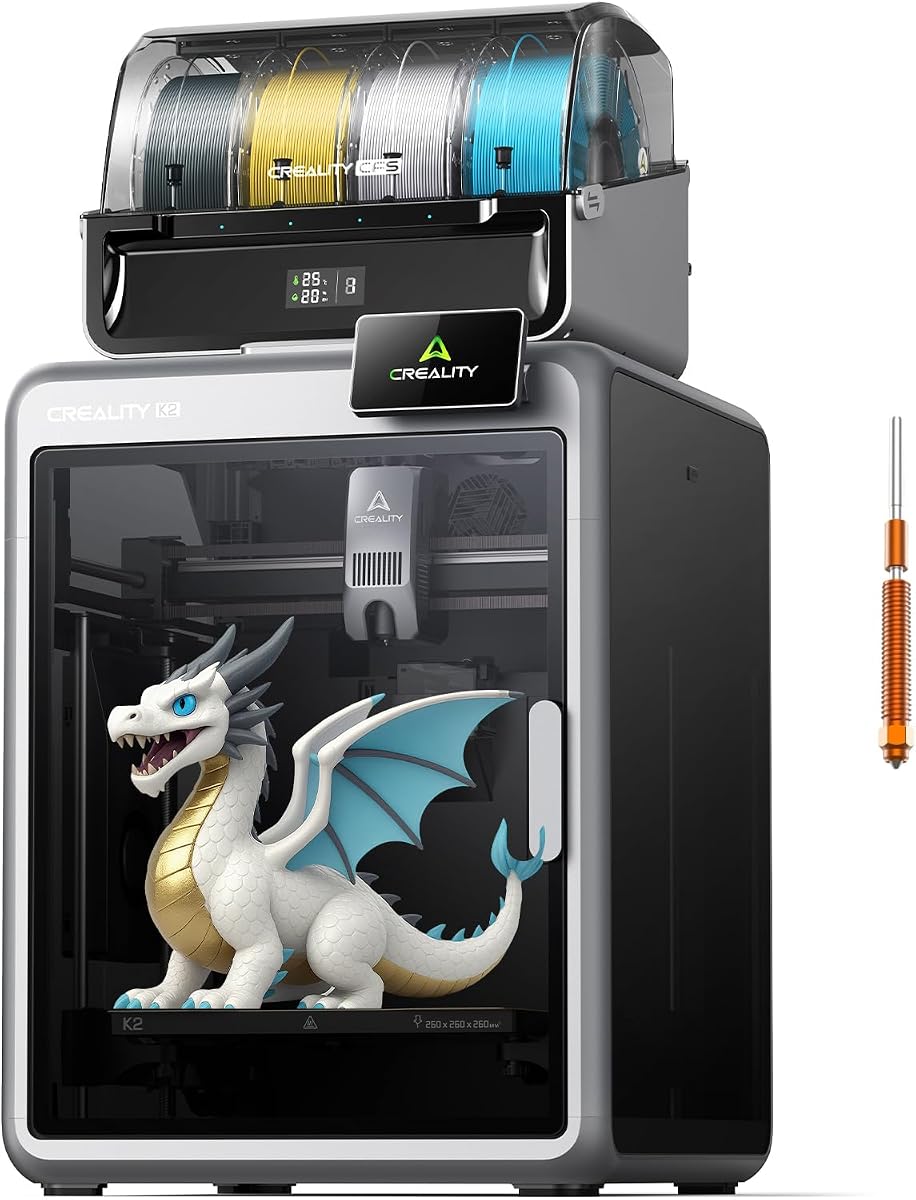
The Creality K2 Combo delivers impressive speed and versatility out of the box. With a rating of 4.0, it is designed to streamline the printing experience. The combination of fast printing and smart features makes it suitable for advanced users looking for production-ready performance.
We may earn a commission when you buy through this link, at no additional cost to you.
Its 600mm/s speed is supported by step-servo motors that ensure precision and quiet operation. The CFS system allows for multi-color printing with expandability up to 16 colors. Pre-assembly saves valuable setup time, allowing users to focus on printing immediately.
While the hardware is powerful, software stability can vary with initial firmware updates. Users should be prepared for potential configuration tweaks to achieve optimal performance. However, the long-term benefits of a pre-built machine outweigh these minor hurdles for many.
If you seek a high-speed printer with smart monitoring and quiet operation, the K2 Combo is worth considering. It offers a robust platform for those who need reliability and speed for both personal and professional printing projects.
Despite its high speed, the K2 Combo operates quietly thanks to balanced fans and precise motor control. This makes it suitable for shared spaces where noise levels need to be kept low during operation.
The CFS system allows for up to 16 colors, providing immense creative freedom. This scalability ensures that as your needs grow, your printer can grow with you without needing a replacement.
We may earn a commission when you buy through this link, at no additional cost to you.
The Bambu Lab A1 is designed to make fast 3D printing accessible to everyone. With a high rating of 4.7, it is praised for its ease of use and reliability. This printer is perfect for beginners who want to experience high speeds without the complexity of manual calibration.
We may earn a commission when you buy through this link, at no additional cost to you.
Its acceleration of 10000mm/s² allows for quick movement without sacrificing detail. The full-auto calibration ensures that the printer is ready to print almost immediately after setup. This user-friendly approach makes it ideal for schools and hobbyists looking for efficiency.
The open frame design limits the types of materials that can be printed effectively compared to enclosed models. Additionally, adding multi-color capabilities requires purchasing an extra AMS Lite module. These factors should be considered based on your specific printing needs.
For those new to 3D printing who want speed and ease of use, the A1 is an excellent choice. Its combination of automation and performance ensures that you can focus on designing rather than troubleshooting technical settings.
The A1 simplifies the workflow with automated calibrations and easy maintenance. This reduces the barrier to entry for high-speed printing, making it suitable for educational and home environments.
Despite being an entry-level machine, the acceleration rivals much more expensive printers. This ensures that print times are significantly reduced compared to traditional machines, saving valuable time for creators.
We may earn a commission when you buy through this link, at no additional cost to you.
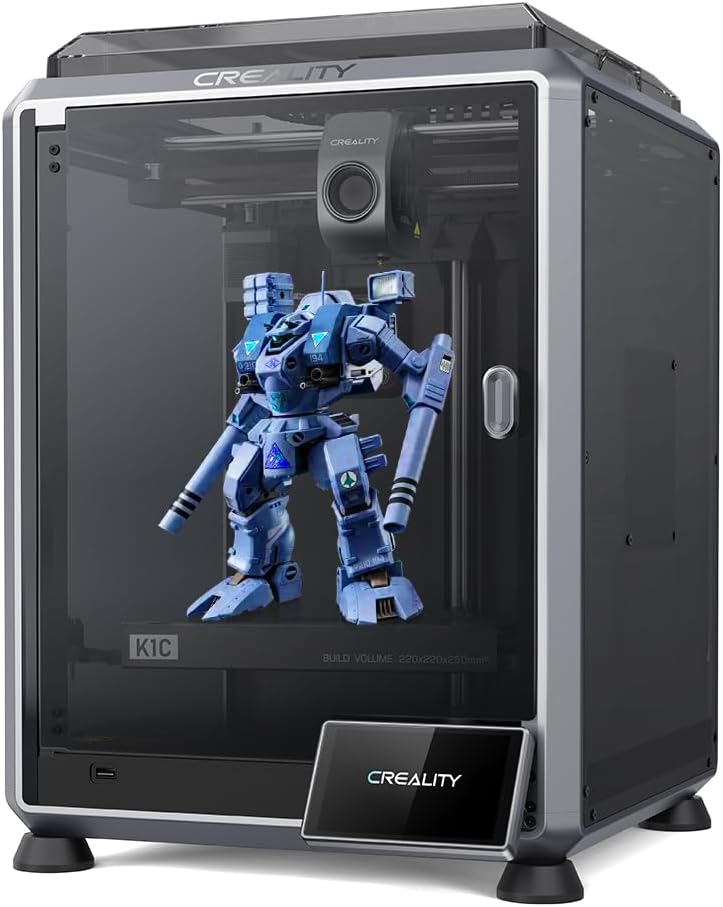
The Creality K1C is specialized for speed and material versatility, particularly with carbon fiber filaments. Its rating of 4.3 highlights its robustness and reliability. This machine is built for users who need to print technical parts quickly without compromising on material options.
We may earn a commission when you buy through this link, at no additional cost to you.
With speeds up to 600mm/s and a dedicated clog-free direct extruder, the K1C handles tough materials effortlessly. The upgraded cooling structure ensures that prints remain stable even at high speeds. Auto calibration features further simplify the process for daily use.
Noise levels can be higher due to the motor adjustments required for such high speeds. Additionally, the lack of a fully enclosed chamber might limit certain engineering materials. However, for PLA and PETG users, this is rarely an issue.
If you need a machine capable of printing durable materials at high speeds, the K1C is a top contender. It balances performance with affordability, making it a solid choice for professional workshops and dedicated hobbyists alike.
The hardened steel nozzle allows the K1C to print abrasive materials like carbon fiber without frequent wear. This extends the lifespan of the printer while maintaining consistent performance over time.
High-speed operation is supported by a robust cooling system. This prevents overheating during long prints, ensuring that quality remains high even when pushing the speed limits.
We may earn a commission when you buy through this link, at no additional cost to you.
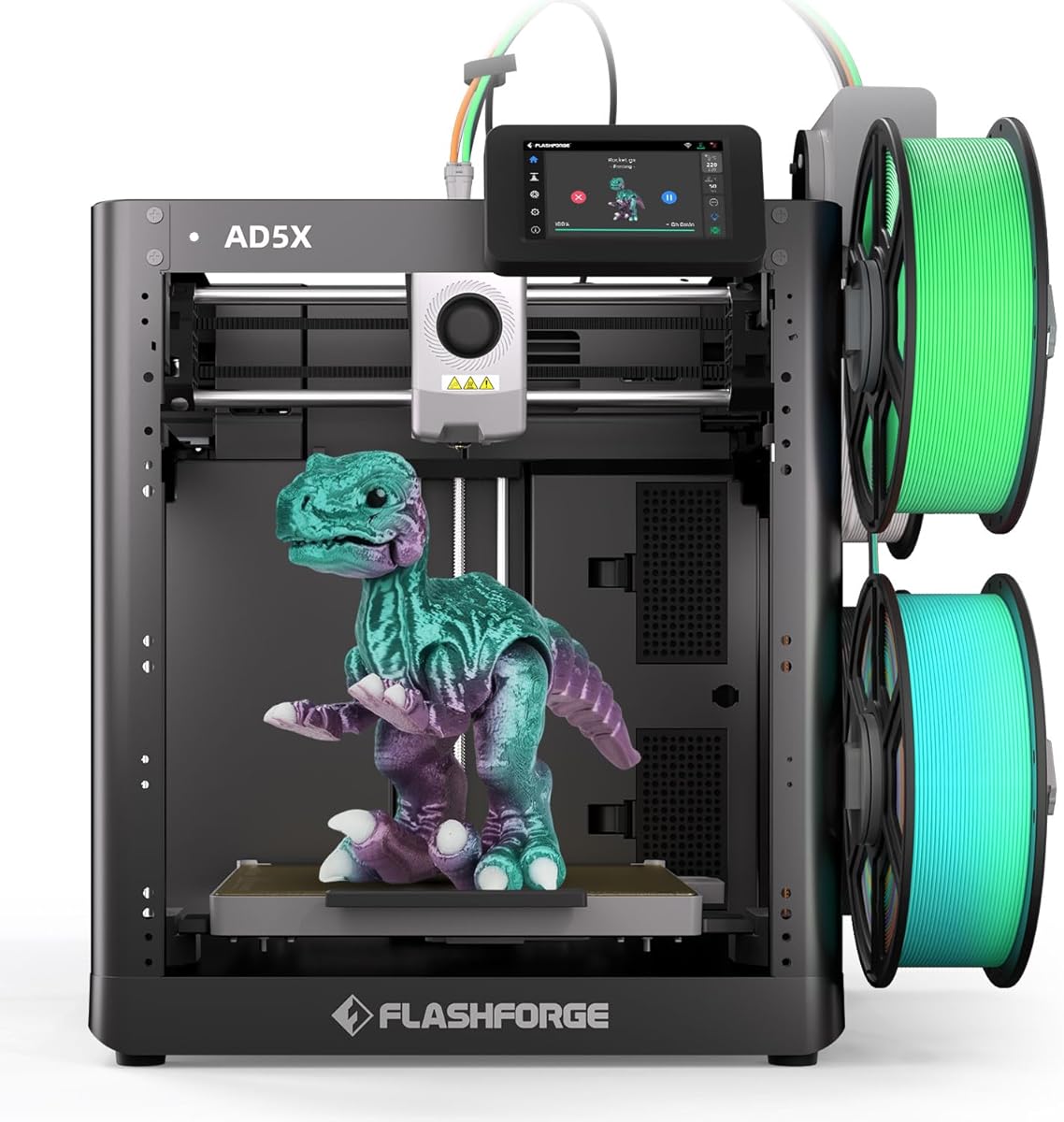
The FLASHFORGE AD5X Multi-Material variant offers rapid prototyping capabilities with support for multiple materials. With a rating of 4.0, it provides a balanced experience for users needing versatility. This printer is designed to handle complex prints quickly and reliably.
We may earn a commission when you buy through this link, at no additional cost to you.
Its CoreXY structure supports speeds up to 600mm/s while maintaining precision. The intelligent filament system allows for multi-material prints without manual intervention. Compact design features save space while offering flexible placement options in crowded workspaces.
Setup for multi-material printing can require careful calibration to ensure seamless color transitions. Users may need to update firmware to access all features fully. Despite these challenges, the speed and versatility make it a strong option for advanced projects.
If you need a space-efficient printer capable of multi-material work at high speeds, this model is worth exploring. It offers the benefits of advanced printing technology without requiring a large footprint in your workspace.
The all-metal motion structure ensures rigidity, which is crucial for maintaining accuracy at high speeds. Vibration compensation algorithms further refine print quality by minimizing alignment shifts.
The IFS allows for multiple materials to be used simultaneously. This capability expands the range of models you can create without needing multiple machines for different parts.
We may earn a commission when you buy through this link, at no additional cost to you.
The Creality K2 (A) Combo delivers a comprehensive solution for fast and colorful 3D printing. Its rating of 4.0 reflects a solid performance for users seeking multi-color outputs. The design focuses on reliability and ease of use for daily production tasks.
We may earn a commission when you buy through this link, at no additional cost to you.
With speeds up to 600mm/s and a built-in air purifier, this printer is ready for professional environments. The direct drive hotend ensures high-temperature printing capabilities. Smart auto leveling and guided calibration reduce setup time significantly.
The learning curve for the software and advanced features can be steep for first-time users. However, once mastered, the system offers a seamless workflow. It is best suited for those willing to invest time into optimizing their prints.
For those prioritizing multi-color capabilities and safety features like air filtration, the K2 is a strong choice. It combines speed with essential safety elements, making it a reliable tool for serious 3D printing projects in shared or professional spaces.
The built-in air purifier filters VOCs, ensuring a safer printing environment. This feature is particularly important for indoor use where ventilation might be limited.
The direct drive extruder supports a wide range of materials. It handles high-temperature filaments with ease, ensuring consistent flow and print quality even at maximum speeds.
We may earn a commission when you buy through this link, at no additional cost to you.
Selecting the right fast 3D printer involves evaluating several technical factors that influence performance and output quality. Understanding these elements ensures you invest in a machine that meets your specific speed and precision requirements.
Maximum print speed indicates the fastest movement the printer can achieve. Look for models that support speeds above 500mm/s for rapid prototyping. However, speed should not compromise detail or structural integrity.
Prioritize printers with high speed ratings and ensure they match your project needs.
Acceleration determines how quickly the printer can reach top speeds. Higher acceleration values like 20,000mm/s² allow for faster start-stop movements. This is essential for maintaining speed without sacrificing accuracy on complex geometries.
Choose printers with high acceleration to reduce overall print times significantly.
Motion systems like CoreXY or bed slingers affect speed and stability. CoreXY systems provide rigid and stable movement suitable for high speeds. This design minimizes vibrations that could lead to artifacts during rapid printing.
Opt for CoreXY or similar rigid motion systems for high-speed applications.
Direct drive extruders improve reliability during fast printing by feeding filament more efficiently. They handle flexible materials better than Bowden systems. This ensures consistent flow rates even when the printer accelerates quickly.
Select a printer with a direct drive extruder for consistent high-speed performance.
Automatic calibration features are vital for maintaining quality at high speeds. Look for auto leveling and vibration compensation systems. These technologies ensure that prints remain precise and consistent throughout the process.
Prioritize models with automation features to maintain quality at high speeds.
Fast printers often require specific filament types for optimal results. Ensure the machine supports materials like PLA and PETG efficiently. Some models handle engineering-grade filaments better with high flow hotends.
Check the compatibility list to ensure your preferred materials work well at high speeds.
Efficient slicing software is crucial for managing fast print speeds. Look for integrated solutions that optimize paths and reduce travel moves. Good software ensures that the hardware performs to its full potential without errors.
Evaluate the software ecosystem to ensure it supports your workflow needs.
Enclosed designs provide thermal stability for faster engineering prints. They also reduce noise and contain fumes for safer operation. This is beneficial when running high-speed jobs for extended periods without interruption.
Consider an enclosed model for safety and thermal stability during rapid prints.
To achieve optimal performance, ensure your printer is leveled and calibrated properly. High-speed printing requires precise alignment to prevent layer shifting. Follow the manufacturer's auto-leveling procedures before starting any new print job.
Regular maintenance of the extruder and hotend is essential for consistent high-speed results. Clean the nozzle frequently to prevent clogs caused by rapid filament movement. Lubricate moving parts as needed to reduce wear from fast movements.
Use slicer settings optimized for speed and quality. Adjust travel speeds and retraction settings to match your machine's capabilities. This minimizes stringing and improves surface finish when pushing the limits of the printer.
Not necessarily. High-end printers use advanced motion systems and compensation algorithms to maintain accuracy. However, extremely high speeds can lead to vibrations. Adjust your speed settings based on the complexity of the model to balance speed and quality.
PLA and PETG are ideal due to their flow characteristics. For engineering materials, ensure the printer has a high-flow hotend. Always check the manufacturer's recommendations for compatible filaments to avoid clogs or poor adhesion.
It depends on the material. Enclosures help maintain temperature for materials like ABS and ASA. For PLA, an enclosure is less critical but can reduce noise. Consider your typical material usage when deciding on an enclosed unit.
Use high-quality filament with consistent diameters. Clean the nozzle regularly and avoid over-extrusion settings. Ensure your hotend temperature is stable and calibrated to prevent heat creep issues that can lead to blockages.
They can be due to rapid motor movements. Look for models with silent motors and vibration dampening. Proper setup and placement on a stable surface can also help reduce operational noise significantly.
While some modifications are possible, high-speed printing requires specific mechanical precision. Upgrading a standard printer is often less effective than buying a model designed for speed. Focus on hardware changes like motor and motion system upgrades if attempting modifications.
Speeds between 100mm/s and 200mm/s are often a safe balance. However, fast printers can push up to 600mm/s depending on the model. Experiment with different speeds to find the sweet spot for your specific projects.
Calibrate after significant maintenance or after moving the printer. Auto-leveling features help reduce this frequency. Generally, checking settings every few hundred hours ensures consistent results and maintains print quality.
The ten models reviewed offer distinct advantages for those seeking speed in their 3D printing workflow. From the Bambu Lab P1S to the Creality K1C, each machine provides a unique balance of performance and features tailored to different user needs.
When making your choice, prioritize the specific factors that matter most to your workflow. Consider whether speed is your top priority or if you need multi-material support. Matching your needs with the right printer ensures satisfaction and efficiency.
Remember that prices and availability can fluctuate. Check current market prices and configurations before finalizing your purchase. Investing in the right machine will significantly enhance your productivity and creative output.