
HGLRC Mini M100 GPS Module
4.6Editor score
Compact 2 to7 inch compatible
Ceramic antenna with PCB
Onboard power indicators
This guide compares ten top GPS modules for drones, reviewing accuracy, speed, and compatibility to help you choose the right navigation system for your UAV.
Choosing the right GPS module is essential for stable drone flight and accurate navigation. Modern modules offer multi-constellation support, fast satellite locks, and reliable return-to-home functions to keep your aircraft safe.
We evaluated ten leading GPS units based on chip performance, antenna quality, compass integration, and flight controller compatibility. Each product was assessed for ease of installation, signal stability, and overall value for FPV and fixed-wing builds.
Every pick highlights key strengths and trade-offs to match different pilot needs. While ratings and availability reflect current data, always verify pricing and stock levels before purchasing to ensure the best deal for your project.
4.6Editor score
4.8Editor score

4.0Editor score
The following comparison table details the core specifications of each selected GPS module. Use this side-by-side overview to quickly identify which model fits your specific drone configuration and navigation requirements.




The HGLRC M100 Pro GPS stands out with its upgraded 10th generation chip and precise QMC5883L compass. It achieves a 4.6 rating for reliable performance in fixed-wing and FPV applications.
We may earn a commission when you buy through this link, at no additional cost to you.
Its expanded receiving channel support ensures robust signal acquisition in challenging environments. The manufacturer offers dedicated support, giving users confidence in long-term reliability and troubleshooting.
While highly capable, the unit is tailored toward fixed-wing UAVs, which may require specific setup knowledge. Pilots should verify flight controller compatibility before installation to avoid configuration issues.
Best suited for builders seeking advanced precision in fixed-wing and large FPV platforms. Its combination of speed, accuracy, and support makes it a top contender in the module category.
The 10th generation chip enables faster satellite locks and more stable positioning data during flight.
Direct support from the original factory ensures quick resolution of technical queries and setup problems.
We may earn a commission when you buy through this link, at no additional cost to you.
This module features the same 10th generation chip but emphasizes quick satellite search capabilities. Its ceramic antenna and PCB design ensure stable signals across GPS, Galileo, and BDS systems.
We may earn a commission when you buy through this link, at no additional cost to you.
The compact 21mm x 21mm footprint makes it ideal for space-constrained builds. At just 7.73g, it adds minimal weight while delivering accurate positioning and heading data for autonomous flight.
Its small form factor may limit mounting options on larger airframes. Pilots should ensure adequate clearance and secure attachment to prevent vibration interference during high-speed maneuvers.
Ideal for FPV fixed-wing pilots needing quick lock-on and lightweight navigation. Its balanced specs provide consistent performance without compromising on signal reliability or directional accuracy.
The module completes satellite search quickly in any area, reducing pre-flight wait times significantly.
Carefully modulated ceramic antenna ensures effective signal reception even in complex environments.
We may earn a commission when you buy through this link, at no additional cost to you.
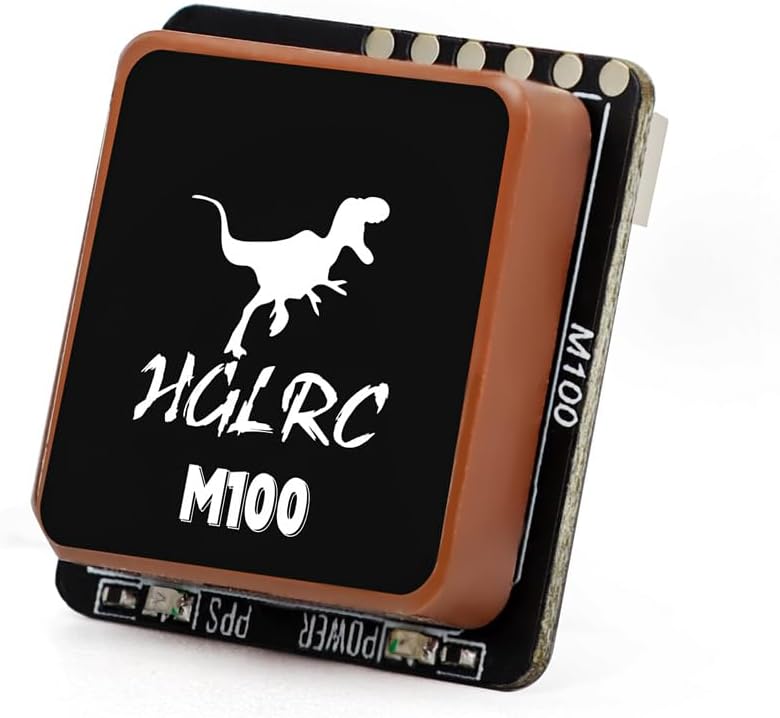
The HGLRC Mini M100 is tailored for smaller 2-7 inch FPV racing drones. Its compact design and ceramic antenna make it a practical budget option for competitive pilots.
We may earn a commission when you buy through this link, at no additional cost to you.
Supporting 3.3V-5V power input simplifies integration with common flight controllers. Onboard indicators for power and PPS provide clear status feedback, reducing setup guesswork during installation.
While cost-effective, it lacks advanced compass integration found in pricier models. Pilots may need to verify additional heading capabilities depending on their specific flight controller requirements.
Perfect for entry-level racers needing reliable GPS without extra bulk. Its balance of size, power flexibility, and antenna quality offers strong value for 2-7 inch platforms.
Supporting 3.3V to 5V input allows flexible wiring across various flight controller configurations.
Onboard power and PPS indicator lights show working status at a glance for quick verification.
We may earn a commission when you buy through this link, at no additional cost to you.
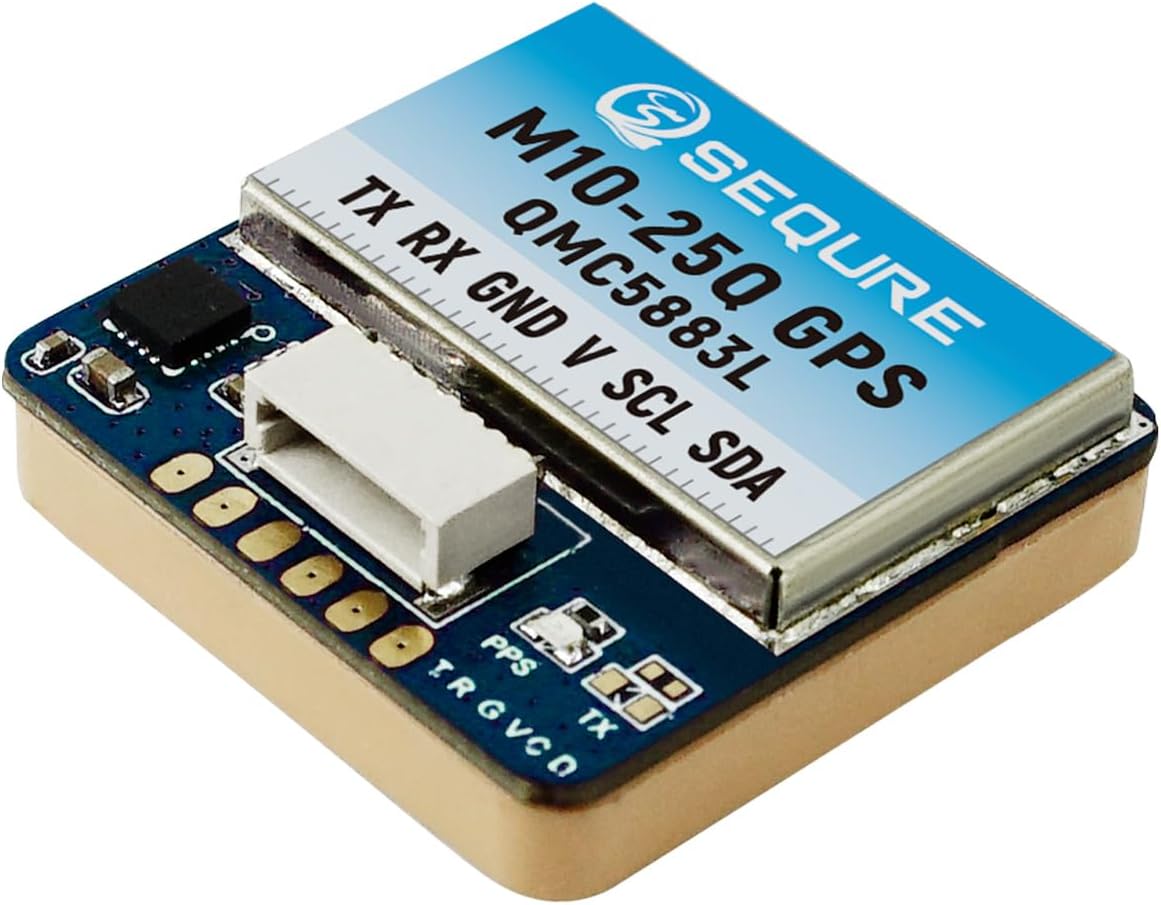
SEQURE M10-25Q FPV leads with a 4.8 rating and robust dual protocol support. Its upgraded 10th generation chip ensures fast satellite positioning with flexible connection methods for varied setups.
We may earn a commission when you buy through this link, at no additional cost to you.
Users can choose plug-and-play or soldering based on their preferences. The support for GPS, GLONASS, BDS, and more delivers high accuracy for real-time navigation and autonomous return-to-home functions.
The dual connection approach adds versatility but may complicate initial choices for beginners. Pilots should confirm which method aligns with their flight controller interface and mounting space.
Ideal for FPV racers needing reliable, accurate navigation with flexible integration. Its high rating and multi-GNSS support make it a trusted choice for competitive and hobbyist pilots alike.
Supports both plug-and-play and soldering for easy integration across different controller types.
Multiple satellite systems ensure precise positioning even in challenging urban or forest environments.
We may earn a commission when you buy through this link, at no additional cost to you.
The JeeFly M8N GPS targets serious automation pilots with Pixhawk and PX4 compatibility. Its 72-channel receiver and built-in compass deliver professional-grade navigation for autonomous flights and complex missions.
We may earn a commission when you buy through this link, at no additional cost to you.
The 10Hz update rate ensures responsive real-time positioning for rapid drone movement. LED status indicators simplify troubleshooting during setup, while the included cable provides straightforward integration.
Its specialized focus means it may not suit all generic flight controllers. Users should confirm controller compatibility and note that firmware updates may be needed for some Pixhawk models.
Best for advanced pilots requiring precise autonomous navigation. Its high channel count and temperature tolerance make it reliable for demanding robotic and FPV missions.
Designed for Pixhawk and PX4 systems to enable precise autonomous navigation and safe return-to-home.
Wide temperature range and included mounting base ensure durability in varied weather conditions.
We may earn a commission when you buy through this link, at no additional cost to you.
Readytosky M10 GPS is designed specifically for Pixhawk 2.4.8 controllers. Its onboard FLASH memory preserves configuration settings, ensuring consistent behavior after power cycles.
We may earn a commission when you buy through this link, at no additional cost to you.
With 1.5m CEP accuracy and external compass support, it delivers dependable navigation. Low power consumption helps preserve flight time while maintaining essential location data for safe operations.
Its Pixhawk specificity restricts broader compatibility. Users must ensure their controller matches the specified model to avoid non-functionality or setup issues.
Ideal for Pixhawk builders needing reliable, non-volatile GPS. Its accuracy and power efficiency make it a solid choice for specialized autonomous aircraft projects.
Onboard FLASH saves configuration changes and retains them even after power is turned off.
Tailored specifically for Pixhawk 2.4.8 controllers to ensure seamless integration and operation.
We may earn a commission when you buy through this link, at no additional cost to you.
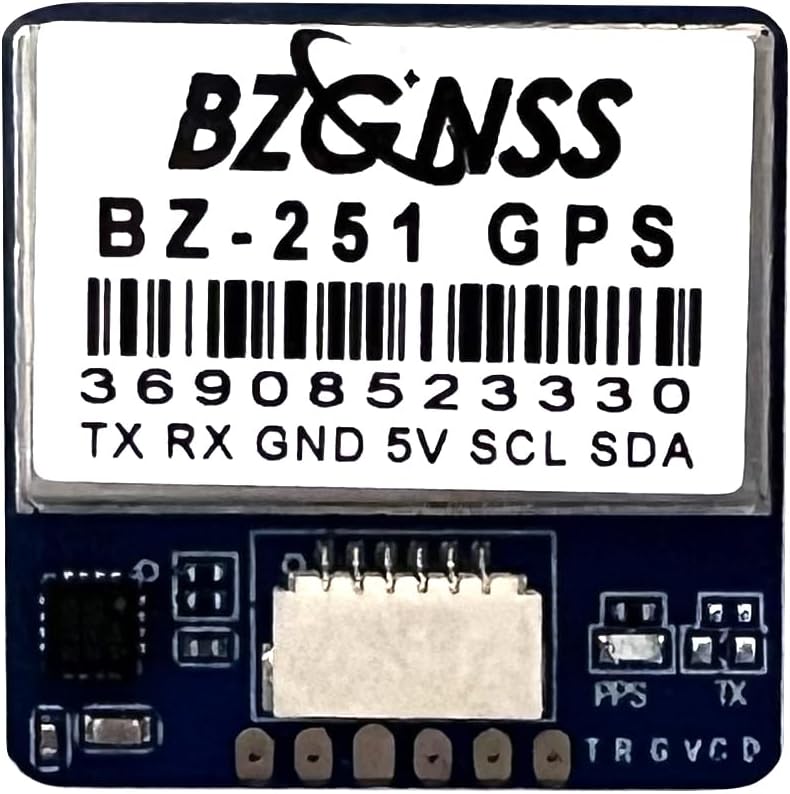
BZGNSS BZ-251 earns a perfect 5.0 rating for its failsafe return-to-home capabilities. The u-blox M10 chip delivers stable positioning even in complex environments, essential for fixed-wing safety.
We may earn a commission when you buy through this link, at no additional cost to you.
Dual protocol support allows seamless integration with various flight controllers. Its oil-sprayed ceramic antenna ensures long-term durability, resisting oxidation and maintaining signal stability during extended flights.
Its design emphasis on fixed-wing rescue may limit general FPV appeal. Pilots should verify their flight controller supports the required failsafe features to fully utilize the module.
Best for RC aircraft and fixed-wing builds prioritizing safety. Its high accuracy and durable construction offer reliable location data for automatic return-to-home functions.
Provides critical location data for reliable failsafe and automatic return-to-home functions.
Oil-sprayed ceramic antenna prevents scratching and oxidation for long-term signal stability.
We may earn a commission when you buy through this link, at no additional cost to you.
This variant features M10 protocol compatibility and a built-in battery to eliminate connection issues. Its versatile NMEA and UBX support makes it adaptable for various flight controllers and long-range flights.
We may earn a commission when you buy through this link, at no additional cost to you.
The compact design is easy to mount on RC aircraft or FPV fixed-wing models. Quick satellite locks reduce pre-flight delays, allowing faster takeoff even in challenging signal environments.
Built-in battery integration may add slight complexity to setup. Users should ensure proper placement to avoid interference with other components during operation.
Ideal for pilots needing protocol flexibility and power resilience. Its lightweight design and precise positioning deliver dependable navigation for racing and long-range FPV builds.
Compatible with both NMEA and UBX protocols for versatile device and controller integration.
Engineered to lock onto signals rapidly even in challenging environments for immediate takeoff.
We may earn a commission when you buy through this link, at no additional cost to you.
AERO SELFIE FK-C1 M9 offers a compact 20x20mm form factor with 9th-gen multi-constellation support. Its IST8310 compass provides reliable heading data, improving navigation in urban or forested areas.
We may earn a commission when you buy through this link, at no additional cost to you.
At just 7g, it adds minimal weight to racing drones. The blue LED indicator offers real-time feedback when a 3D fix is acquired, simplifying status checks during setup.
Its 9th-generation chip may offer fewer channels than newer models. Pilots should weigh size benefits against maximum satellite acquisition needs for their specific flight environment.
Best for space-constrained builds needing precise heading data. Its compact size and reliable performance make it suitable for FPV and racing platforms where weight matters.
Equipped with IST8310 compass for reliable navigation in complex flight conditions.
Weighing only 7g makes it ideal for performance-critical FPV racing drones.
We may earn a commission when you buy through this link, at no additional cost to you.
FK-D1 GNSS Module features a 10th gen chip and UART interface for broad robotics and drone controller compatibility. Its high-gain antenna ensures optimal signal reception in urban or natural cover.
We may earn a commission when you buy through this link, at no additional cost to you.
Built-in flash memory saves user settings, reducing reconfiguration needs after power cycles. The QMC5883L compass enhances orientation accuracy for precise drone flight control and motion tracking.
At 12g it is slightly heavier than smaller units. Users should account for this in weight-sensitive builds to maintain overall flight performance and efficiency.
Ideal for robotics and drone builds needing broad flight controller support. Its reliable positioning and saved settings make it suitable for diverse autonomous and FPV applications.
Compatible with INAV, Betaflight, Ardupilot, and PX4 for versatile integration.
Built-in flash memory saves settings for hassle-free operation after power cycles.
We may earn a commission when you buy through this link, at no additional cost to you.
Selecting the right GPS module involves evaluating chip generation, sensor integration, power needs, and flight controller compatibility. Use the following factors to align your purchase with specific performance goals.
Newer chips like the 10th generation offer faster satellite acquisition and lower power consumption. Faster update rates such as 10Hz provide more responsive positioning during high-speed FPV maneuvers.
Look for modules with recent chip designs to ensure quicker locks and reliable navigation across various environments.
Modules that track GPS, GLONASS, Galileo, and BeiDou satellites can access more satellites simultaneously. This reduces the risk of signal loss in urban canyons or dense forests.
Prioritize multi-GNSS support for enhanced accuracy and reliability during complex flights.
An integrated compass provides critical heading data needed for autonomous navigation and return-to-home functions. Separate compass modules may be required for some setups but add complexity.
Choose modules with built-in compass sensors to simplify wiring and improve directional accuracy.
Ceramic antennas with expanded PCB designs improve signal stability and reduce interference. Durability features like oil-spray coatings protect the antenna from oxidation and scratches.
Ensure the antenna design suits your airframe size and expected flight conditions for consistent performance.
Not all GPS modules work with every flight controller. Pixhawk and PX4 units require specific modules, while Betaflight and INAV have distinct protocol needs.
Verify protocol support such as NMEA or UBX to confirm seamless integration with your current controller.
Modules typically accept 3.3V to 5V power input. Some offer built-in batteries or flash memory to retain settings during power cycles.
Check voltage compatibility and power draw to avoid battery drain or controller overload issues.
Compact modules are crucial for small racing drones where weight affects flight time and agility. Larger units offer more features but may be better for fixed-wing or long-range builds.
Balance physical dimensions with performance needs to maintain optimal aircraft weight and center of gravity.
Some modules offer plug-and-play connectors while others require soldering. Dual connection options provide flexibility but may require careful decision-making.
Select an installation method that matches your skill level and controller interface type for a straightforward build.
Mount the GPS module as far away from power cables and video transmitters as possible to reduce electromagnetic interference. Secure it firmly with vibration dampening material to prevent movement during flight.
Connect the module to the flight controller using the correct UART pins. Ensure the TX and RX lines are matched properly to maintain data communication between components.
Periodically test the module outdoors under clear sky conditions to verify satellite lock and update rates. Clean the antenna surface gently to remove debris that could block signal reception.
GPS modules typically track satellites from the US-based GPS system only. GNSS modules support multiple satellite constellations including GLONASS, Galileo, and BeiDou. Using GNSS improves accuracy and reliability in varied environments.
Yes, a compass provides heading information that GPS alone cannot deliver. Most modern GPS modules include a built-in compass. An external one is only needed if the module lacks this feature.
A minimum of four satellites is required for a 3D position fix. However, tracking more satellites improves accuracy and reliability. Modern modules can track 32 or more simultaneously for better performance.
Yes many GPS modules support NMEA or UBX protocols compatible with Betaflight. Ensure your flight controller supports GPS configuration in the Betaflight settings. Check pinout and protocol compatibility before purchase.
Weak signals or interference from nearby electronics can delay satellite acquisition. Move to an open outdoor area away from metal structures or radio transmitters. Ensure the antenna has a clear view of the sky.
No, Pixhawk controllers often require specific GPS modules designed for their protocol. Some modules like Readytosky M10 are optimized for Pixhawk. Verify compatibility notes in the product description.
GPS records the takeoff location and provides coordinates during flight. If failsafe triggers the flight controller guides the drone back to that point. Compass data ensures the correct orientation during the return.
A 10Hz rate refreshes position data ten times per second. This provides smoother real-time navigation and more accurate autonomous flight paths. Faster updates help during high-speed maneuvers and precise landings.
Our top picks highlight strong options across budget, performance, and safety categories. Each module offers distinct advantages for different drone types and pilot experience levels.
Prioritize chip generation and multi-GNSS support for reliable navigation. Ensure compatibility with your flight controller and verify antenna design suits your operational environment.
Always check current availability and compatibility notes before purchasing to match your specific build requirements. Proper setup and testing will ensure the safest and most accurate flight experience possible.