
EVISTR Digital Voice Recorder
4.2Editor score
64GB storage capacity
Voice activation feature
Long battery life
Discover the top handheld recorders for journalists in 2026. We compare audio quality, battery life, and features to help you capture clear interviews anywhere.
Professional journalists need reliable tools to capture every word during interviews and field reporting. A quality handheld recorder ensures your audio is clear, crisp, and ready for broadcast or publication without technical hiccups.
We evaluated ten top models based on microphone performance, ease of use, battery longevity, and overall build quality. Our comparison focuses on devices that deliver professional results in challenging environments while remaining portable enough for daily carry.
Each selection highlights specific strengths like noise reduction or float recording to match different reporting needs. Please note that pricing and availability fluctuate regularly, so check current listings before making your final purchase decision today.
4.2Editor score

4.4Editor score

4.7Editor score
This side-by-side comparison outlines the core specifications and unique capabilities of each selected recorder to help you identify the best fit for your specific journalism workflow and audio quality requirements.




The Zoom H2 Essential stands out as a top-tier tool for journalists needing reliable audio capture. With a high rating for its intuitive design and flexible features, it handles everything from quiet interviews to noisy street scenes without clipping.
We may earn a commission when you buy through this link, at no additional cost to you.
Its three built-in microphones offer nine selectable patterns allowing you to adapt quickly to different environments. The 32-bit float recording means you never have to worry about setting gain levels perfectly before pressing record.
Trade-offs include a battery that may need recharging after long days and the lack of an integrated speaker for immediate playback. These are minor issues given the robust backup recording to SD card while connected via USB.
Journalists who prioritize sound safety and ease of use will find this device invaluable. It is highly recommended for anyone needing a versatile recorder that grows with their reporting needs without constant technical adjustments.
Select from nine patterns to match your scene whether capturing a single voice or ambient crowd noise.
Never miss a critical sound due to distortion thanks to the forgiving 32-bit float digital recording engine.
We may earn a commission when you buy through this link, at no additional cost to you.
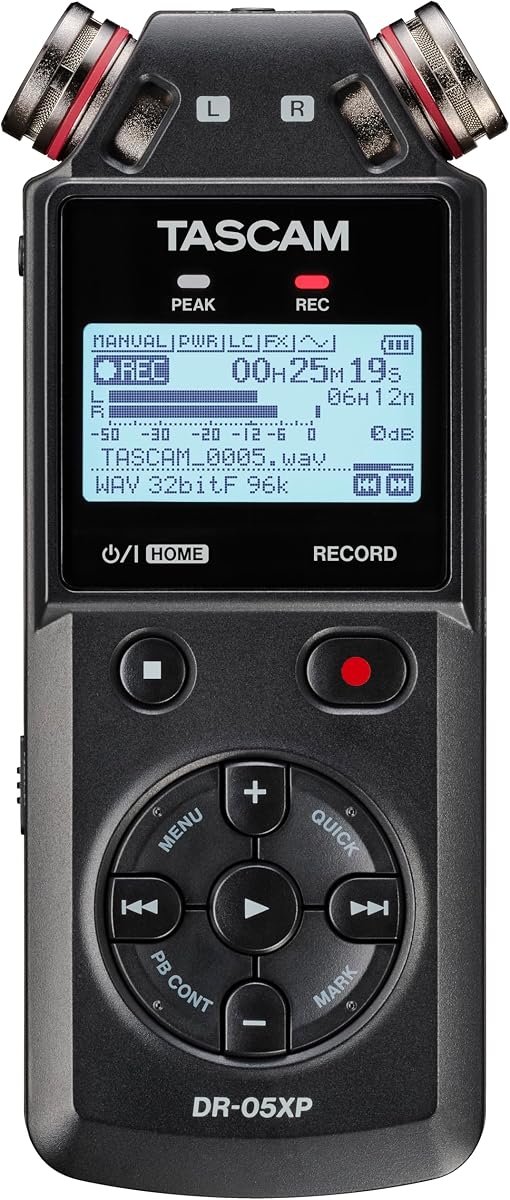
The TASCAM DR-05XP delivers professional-quality 32-bit float recording at an accessible price point. Its 4.2 rating reflects satisfaction with its ability to capture clear audio in diverse settings ranging from quiet offices to bustling newsrooms.
We may earn a commission when you buy through this link, at no additional cost to you.
Omnidirectional condenser microphones handle loud sources up to 125dB SPL making it ideal for events where sound levels vary wildly. The USB-C interface allows it to function as a direct audio interface for your computer when needed.
While the build is largely plastic and batteries are not included in the box these costs are offset by the advanced audio features. It remains a practical tool for reporters needing high fidelity without breaking the budget.
This recorder is perfect for journalists who want to upgrade from phone recordings to something more reliable. The long battery life supports extended shifts without constant recharging or battery swaps.
Capture everything from whispers to shouts without distortion thanks to the generous 125dB input headroom.
Use it as a standalone recorder or connect directly to your laptop for live streaming and interviews.
We may earn a commission when you buy through this link, at no additional cost to you.
The EVISTR Digital Voice Recorder offers exceptional value for journalists on a tight budget. With its strong rating and high capacity storage it ensures you can record multiple interviews without worrying about running out of space.
We may earn a commission when you buy through this link, at no additional cost to you.
PCM intelligent noise reduction technology helps clean up background hiss making spoken words clearer during playback. The voice activation feature allows the device to start recording only when sound is detected reducing empty silence.
The device feels somewhat basic compared to premium models and the menu navigation can be sluggish. However these drawbacks are acceptable given the significant storage and recording capabilities provided for the price.
For field reporters who need long hours of capture time on a single charge this unit is a smart choice. It is particularly useful for documenting lengthy interviews or meetings where clarity is paramount.
Store thousands of hours of audio on the internal memory so you never lose data during long assignments.
Automatically start recording when voices are detected so you capture only the relevant conversation segments.
We may earn a commission when you buy through this link, at no additional cost to you.
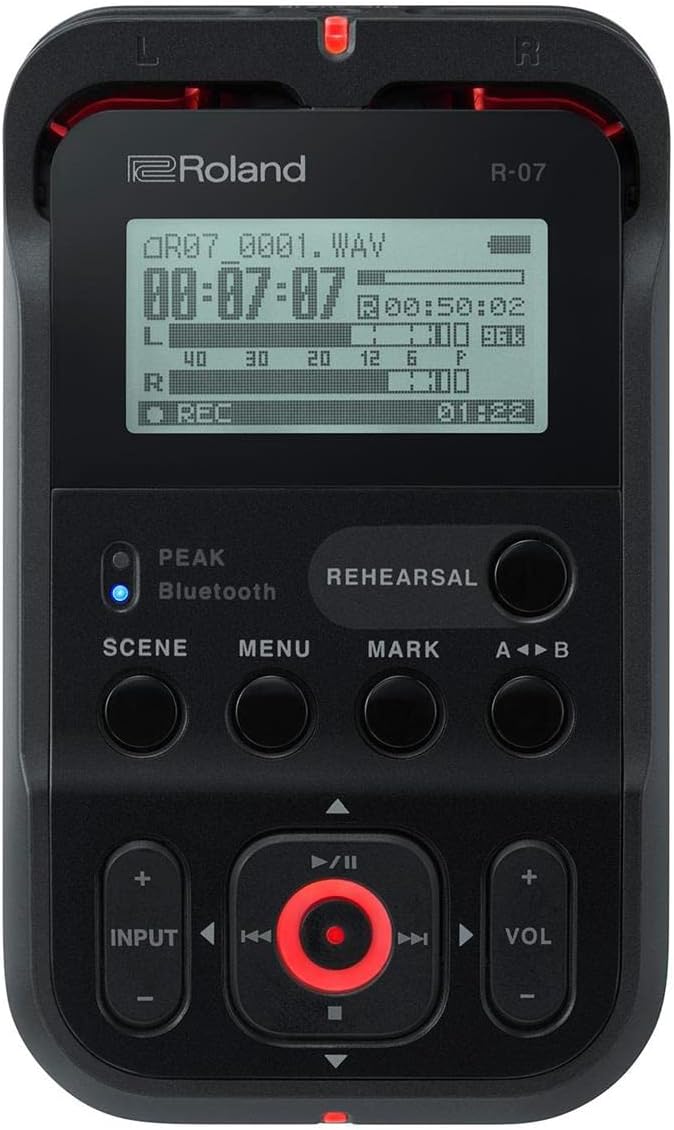
The Roland R-07 is a high-resolution recorder designed for professionals who need reliable wireless monitoring. Its strong rating highlights the convenience of Bluetooth control which lets you listen to recordings without tangled cables.
We may earn a commission when you buy through this link, at no additional cost to you.
Simultaneous MP3 and WAV recording ensures you always have a backup file in case your primary format is incompatible. The high-capacity battery supports extended use making it suitable for long field reporting trips.
It comes with a higher price tag and some users report slight latency when using Bluetooth headphones. These issues are often manageable with the right setup and accessories for wireless streaming.
Journalists who value convenience and high-quality audio playback will appreciate the seamless integration with mobile devices. It is a solid choice for those who need to review audio on the go efficiently.
Use Bluetooth speakers or headphones for immediate playback without the hassle of wires in noisy environments.
Record two file formats at once to ensure compatibility with different editing software or distribution platforms.
We may earn a commission when you buy through this link, at no additional cost to you.
The Zoom H5 is renowned for its modular design which allows journalists to swap out input capsules for different recording needs. Its high rating reflects its versatility and durability in demanding field conditions.
We may earn a commission when you buy through this link, at no additional cost to you.
Four-track simultaneous recording gives you flexibility to layer audio or isolate sources during post-production. The XLR inputs mean you can connect professional microphones directly without needing extra adapters.
It does require a separate purchase for batteries and the modular system adds complexity for beginners. However the control and audio quality it provides far outweigh these minor inconveniences for pros.
If you need a recorder that can adapt to any audio scenario from interviews to ambient field recordings the H5 is the tool. It is highly recommended for serious professionals who need long-term reliability.
Change your microphone type instantly to match your environment whether you need stereo or directional capture.
Connect external high-quality microphones via XLR to achieve broadcast-ready sound quality on the go.
We may earn a commission when you buy through this link, at no additional cost to you.
The Tascam DR-40 remains a classic choice for journalists who prefer a proven and simple recording workflow. Its high rating shows continued satisfaction with its robust build and straightforward operation in the field.
We may earn a commission when you buy through this link, at no additional cost to you.
It features four-track recording and XLR inputs allowing for versatile audio capture without complex setups. The metal body ensures durability against daily wear and tear during travel and outdoor assignments.
While it lacks some modern features like Bluetooth it makes up for it with reliability and direct control. Battery performance can be inconsistent so bringing spares is always a good idea for long shifts.
This recorder is ideal for those who want a no-nonsense device that just works every time. It is a solid investment for journalists who prioritize durability and simplicity over flashy new features.
A metal chassis ensures the device withstands the rigors of daily fieldwork without cracking or breaking easily.
Plug in professional XLR microphones or use the built-in mics for versatile audio capture in any scenario.
We may earn a commission when you buy through this link, at no additional cost to you.
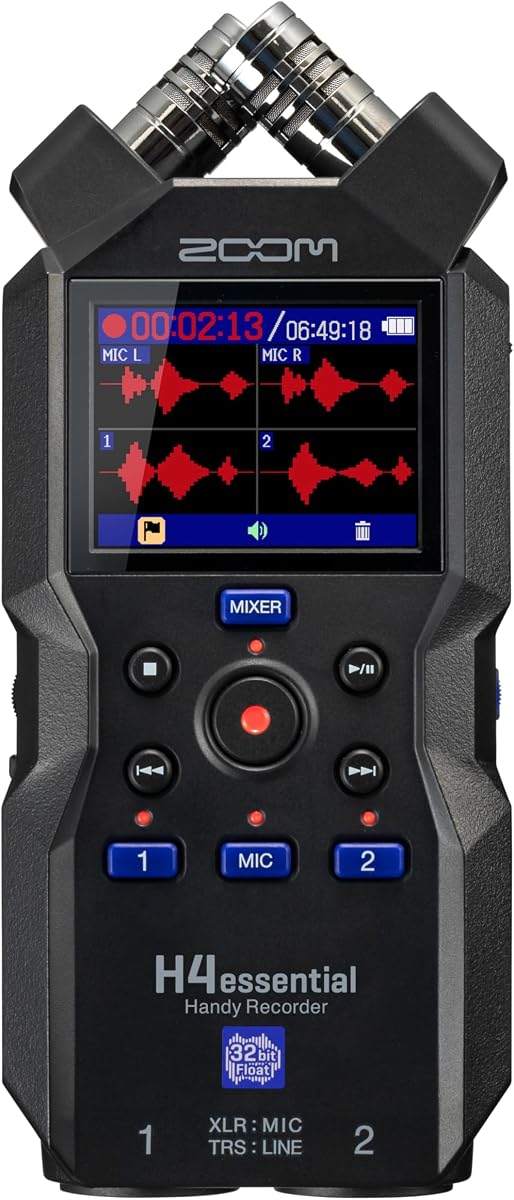
The Zoom H4 Essential bridges the gap between simple recorders and full broadcast tools with hybrid streaming capabilities. Its solid rating highlights user appreciation for the spoken menu guidance which aids usability for all users.
We may earn a commission when you buy through this link, at no additional cost to you.
It allows you to connect to computers via USB-C for live streaming while simultaneously saving audio to an SD card. The inclusion of XLR inputs means you can upgrade your microphone setup as your needs grow.
Battery life is decent but may require extra spares for all-day use. The accessibility features are a rare and valuable addition that broadens its appeal to a wider user base.
Journalists who want a modern recorder with future-proof features will find this unit highly useful. It balances performance and accessibility making it a smart buy for diverse news environments.
Record locally while streaming audio to your computer for live coverage and archival safety simultaneously.
Spoken menu guidance helps visually impaired users navigate settings easily without needing to see buttons.
We may earn a commission when you buy through this link, at no additional cost to you.
The Pocket AI Voice Recorder transforms audio into actionable text instantly which is a game-changer for journalists on deadline. Its high rating reflects the massive time savings provided by its auto transcription and summarization features.
We may earn a commission when you buy through this link, at no additional cost to you.
MagSafe compatibility lets you attach the device securely to your phone for hands-free recording. The battery lasts for up to four days so you can use it for extended trips without recharging.
Advanced AI features require a subscription which may add to the long-term cost. You also need a smartphone to utilize the full power of the transcription software.
For reporters who need to turn interviews into stories quickly this recorder is invaluable. It is best suited for those who rely heavily on text output and digital workflows.
Convert hours of audio into readable text instantly so you can focus on writing rather than typing.
Get concise summaries of meetings and interviews to quickly review key points without listening to everything.
We may earn a commission when you buy through this link, at no additional cost to you.
The Zoom H1 Essential is designed for beginners who need a straightforward device to capture audio without complications. Its solid rating indicates that it meets basic needs well for simple interviews and ambient recording.
We may earn a commission when you buy through this link, at no additional cost to you.
It features a built-in stereo microphone and USB-C connectivity which makes it versatile for quick setup on computers. The simple operation means you can start recording within seconds of powering it on.
It lacks some of the advanced controls and inputs found in higher-end models which might limit professional growth. However for starting out or for backup recording it is a reliable choice.
This recorder is perfect for student journalists or those just beginning their field work. It offers a low barrier to entry while providing clean stereo audio for basic stories.
Start recording with a single button press making it ideal for capturing spontaneous moments in the field.
Built-in stereo mics capture clear ambient sound and voice without needing external equipment or cables.
We may earn a commission when you buy through this link, at no additional cost to you.
The Tonfarb 64GB Recorder offers exceptional battery life which is crucial for long field assignments without power access. Its reasonable rating reflects satisfaction with its basic functionality and reliability for standard voice recording tasks.
We may earn a commission when you buy through this link, at no additional cost to you.
With a large screen and password protection it offers user-friendly navigation and basic security for sensitive interview data. The PCM recording mode ensures decent audio quality for spoken word capture.
It does not match the fidelity of premium recorders and software support is limited compared to major brands. However the battery performance and ease of use make it a practical backup tool.
Journalists who prioritize battery endurance over audio fidelity will find this unit useful. It is a good option for documenting meetings or lectures where long recording times are essential.
Capture up to 48 hours of audio on a single charge to survive extended shifts without recharging.
Protect your recordings with password protection to ensure sensitive interview content remains private.
We may earn a commission when you buy through this link, at no additional cost to you.
Selecting the right recorder depends on your specific reporting needs and environment. Here are the key factors to evaluate before purchasing.
Look for omnidirectional or stereo condenser microphones that can capture clear audio from multiple directions. High-quality mics reduce the need for external gear and ensure you capture every word during interviews.
Prioritize devices with high SPL handling so loud environments do not cause distortion or clipping during recording.
Journalists often work long hours in the field so a battery lasting at least 15 to 30 hours is ideal. Consider models with rechargeable batteries or standard AA cells for quick swaps in remote locations.
Always check real-world battery performance and bring spares to ensure you do not miss critical moments due to power loss.
Ensure the recorder supports SD cards or has ample internal memory to store hours of high-quality audio. Larger capacity means fewer interruptions to transfer files or change cards during long interviews.
Select units that support high-capacity SDHC cards if you plan to record in uncompressed formats like WAV.
USB-C connectivity is now standard for fast file transfer and direct connection to computers for streaming. Some models offer Bluetooth for wireless headphones or remote control via smartphone apps.
Choose a device that connects easily to your existing workflow whether you need physical ports or wireless capabilities.
Advanced noise reduction helps isolate voices from background distractions like traffic or crowds. Look for digital signal processing features that clean up audio before you even start editing.
Effective noise reduction saves hours of post-production time and ensures your final audio remains professional.
A compact and lightweight design makes it easier to carry a recorder all day without fatigue. Pocket-sized devices allow you to keep them in your pocket for spontaneous interviews.
Balance portability with necessary features ensuring the device fits comfortably in your hand for long periods.
Intuitive controls and clear menus help you start recording quickly when seconds matter. Simple interfaces reduce the risk of errors during critical moments.
Prioritize devices that offer clear feedback and simple button layouts to minimize technical distractions on the job.
Journalists work in unpredictable environments so a rugged and metal body is preferred over plastic alternatives. Durability ensures the device survives drops and daily wear and tear without failing.
Choose models with sturdy construction and reliable sealing against dust and moisture for long-term use.
Always format your SD card before starting a new interview session to prevent file errors. Test the recorder with a quick sample to ensure levels are correct and the microphone is active.
Keep the device away from extreme temperatures and moisture which can damage internal components. Store it in a protective case when not in use to prevent scratches and accidental button presses.
Regularly update firmware if available to fix bugs and improve audio performance. Clean the microphone grilles gently with a soft brush to remove dust and ensure consistent sound quality.
WAV is the standard lossless format for professionals because it preserves maximum audio quality for editing. MP3 is useful for quick backups but lacks the fidelity needed for final broadcast or publication.
Built-in microphones are often sufficient for quiet indoor settings. However for noisy environments or distance interviews external microphones provide clearer results and better isolation.
Journalists should aim for at least 32GB of storage to record several hours of interviews without deleting files. High-capacity SD cards up to 128GB are recommended for extended field trips.
Many modern recorders connect via USB-C to smartphones for direct transfer or streaming. Check compatibility with your specific phone model and operating system before purchasing.
With proper care a quality handheld recorder can last several years of daily use. Battery lifespan varies but many units allow battery replacement to extend the device's overall life.
Most standard recorders are not fully waterproof and should be protected from rain. Some models offer splash resistance but you should still use a protective case in wet weather.
Yes many models with USB-C output function as a microphone for live streaming on computers. Verify the device supports direct streaming or uses audio interface drivers for this purpose.
We have reviewed ten top models ranging from budget-friendly options to professional-grade tools. Each device offers unique strengths whether you prioritize audio quality battery life or advanced features.
Focus on the factors that matter most to your specific reporting style such as portability or wireless connectivity. Choosing the right tool ensures you never miss a critical moment due to technical limitations.
Prices and availability fluctuate so please verify current listings before making your final purchase decision. Investing in the right recorder will pay off in cleaner audio and more professional storytelling.