
SABRENT 74 in 1 3.5 Inch Internal Flash Media Card Reader/Writer with USB Port
4.0Editor score
Supports 74 card types
Includes USB 2.0 port
Internal power connector
This guide compares the top internal media card readers for desktop PCs, evaluating compatibility, speed, and build quality to help you choose the best model.
Finding the right internal media card reader can transform how you manage files on your desktop computer. These devices offer seamless integration into your system bay, providing quick access to various memory card formats without cluttering your desk with external peripherals or dongles.
We evaluated ten highly rated internal card readers based on their supported formats, connection speeds, and ease of installation. Each product was assessed for compatibility with modern operating systems and its ability to handle high-capacity storage media efficiently for professional and casual users alike.
Each pick highlights unique strengths such as USB 3.0 support, multi-slot access, or compact design. Please note that prices and availability fluctuate frequently, so we recommend verifying current details before making your final purchase decision online or in stores.
4.0Editor score
4.5Editor score

5.0Editor score
The following table provides a side-by-side comparison of all ten internal media card readers featured in this guide, highlighting key specifications and compatibility details to help you make an informed decision.


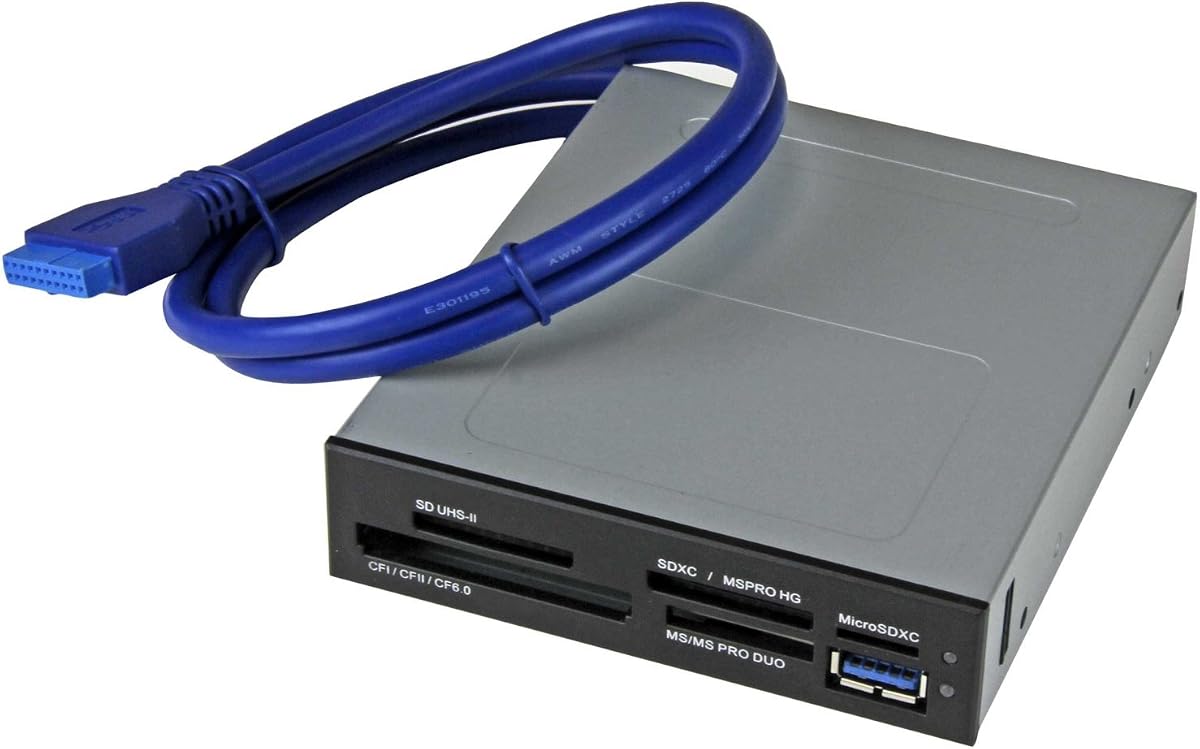
The StarTech Internal Card Reader is a robust solution for professionals who demand speed and reliability. Rated 4.5 stars, it features USB 3.0 connectivity and supports simultaneous access to multiple card types, making it ideal for video editors and photographers who need to offload data quickly.
We may earn a commission when you buy through this link, at no additional cost to you.
Its design includes a front-facing USB 3.0 port and supports a wide array of formats including SDXC, CF, and Memory Stick. The device connects internally via a 20-pin header, ensuring a clean setup without external cables. This makes it a perfect fit for workstations where stability and performance are critical.
While the price is higher than basic models, the reliability and support justify the investment. The included 20-pin IDC cable and screws make installation straightforward. However, users should ensure their motherboard has the necessary header available before purchasing.
This reader is best suited for IT professionals and content creators. If you need a durable, high-speed internal solution for a desktop PC, this model offers the best balance of features and performance available today.
USB 3.0 provides up to 5Gbps speeds, significantly reducing wait times when copying large video files or RAW images from memory cards.
Access four different card slots at once to copy files between cards efficiently without removing one to insert another.
We may earn a commission when you buy through this link, at no additional cost to you.
The SABRENT 74 in 1 reader is an incredible value for those needing broad compatibility. With a rating of 4.0, it supports 74 different types of memory cards, covering almost every legacy and modern format you might encounter. It is a practical choice for users with mixed media collections.
We may earn a commission when you buy through this link, at no additional cost to you.
It features an internal power connector to ensure stable operation and includes an extra USB 2.0 port for additional peripherals. The slots cover M2, XD, SD, and CF formats, though some cards may require adapters. This versatility makes it a strong candidate for general PC users.
The main trade-off is the USB 2.0 speed, which is slower than modern standards. While acceptable for photos and documents, it may not suit high-speed video transfers. Additionally, the build is plastic and functional rather than premium.
If budget is your priority and you need to read many card types, this is the best pick. It offers the widest support at the lowest cost, making it a versatile utility for any desktop setup.
Supporting 74 formats means you rarely need to buy a new reader for old cameras or devices, saving long-term hassle and money.
The extra USB 2.0 port on the front panel allows you to plug in a mouse or flash drive without reaching behind the PC case.
We may earn a commission when you buy through this link, at no additional cost to you.
Vantec Link USB 3.0 Multi-LUN reader holds a perfect 5.0 rating for its exceptional capacity and performance. It supports CompactFlash up to 144PB and SDXC up to 2TB, making it ideal for users with massive storage needs. The Multi-LUN technology allows simultaneous access to different slots.
We may earn a commission when you buy through this link, at no additional cost to you.
This device supports virtually every major card format including CF, SD, MMC, eMMC, and MS variants. The internal connection via a 20-pin header ensures a clean build without external cables. Its high-speed transfer capabilities are essential for professional workflows involving large datasets.
The only limitation is the requirement for a specific motherboard header, which might not be present on all systems. Additionally, the price is higher than standard options. However, the reliability and capacity make it worth the investment for professionals.
Choose this reader if you need top-tier performance and compatibility with the largest memory cards. It is the premium choice for data-intensive tasks where speed and reliability are non-negotiable.
Supporting cards up to 2TB ensures you will not outgrow this reader for many years, even with rapidly increasing storage needs.
Read and write to multiple cards simultaneously, speeding up the workflow for editing multiple RAW files at once.
We may earn a commission when you buy through this link, at no additional cost to you.
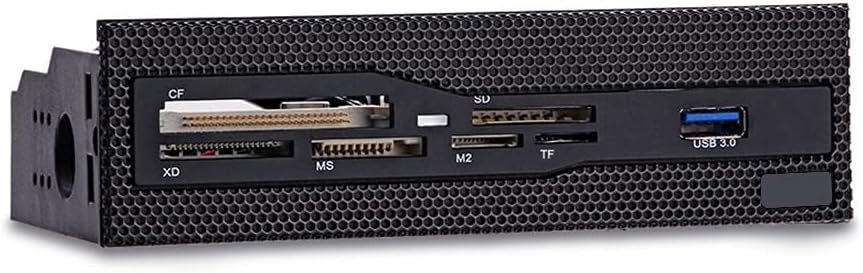
This 5.25 Internal Card Reader is designed for users who prioritize speed and style. With a rating of 4.3, it offers a USB 3.0 front panel and durable copper-plated slots for stable transmission. It fits standard 5.25 drive bays and features a mesh grid panel for a custom look.
We may earn a commission when you buy through this link, at no additional cost to you.
It supports common formats like CF, XD, MS, M2, and TF cards efficiently. The high-speed interface makes it suitable for modern media transfers. The grid panel integrates well with cases that have a front mesh design, adding a professional touch to your setup.
The main constraint is the 5.25 inch bay requirement, which might not be available in smaller cases. Also, installation requires some technical knowledge. However, if you have the space, it offers a great balance of speed and design.
This is a solid choice for PC builders and tech enthusiasts who want a stylish, fast internal reader. It is best for those who value aesthetic integration with their PC case.
USB 3.0 interface enables efficient data transmission, reducing wait times when moving large media files from cards to storage.
Copper-plated card slots ensure stability during transmission, reducing the risk of connection errors or read failures.
We may earn a commission when you buy through this link, at no additional cost to you.
The 5.25inch Media Dashboard is a versatile hub combining card reading with USB and audio connectivity. With a rating of 3.8, it features a built-in USB 3.0 hub and eSATA support for fast transfers. The audio jacks add convenience by moving microphone and speaker ports to the front.
We may earn a commission when you buy through this link, at no additional cost to you.
It supports various formats including M2, TF, SD, and MS. The panel includes necessary cables for USB 3.0, USB 2.0, and audio connections. This makes it a one-stop solution for front-panel needs on a desktop build.
The lower rating suggests potential reliability issues or complex installation. Also, multiple cables can add clutter inside the case. However, for users needing audio and USB expansion, the functionality is valuable.
This dashboard is best for PC builders who need to expand front-panel options. Consider it if you need audio and multiple USB ports alongside card reading capabilities.
Dedicated front-panel audio jacks eliminate the need to reach behind your chassis for microphone and speaker connections.
With USB 3.0's 5Gbps bandwidth and eSATA support, transfers are accelerated for creative professionals with large media files.
We may earn a commission when you buy through this link, at no additional cost to you.
The TCC-QL5E is a multifunction dashboard offering SATA and USB connectivity. It supports USB 3.0 and eSATA for improved work efficiency. The five-in-one card reader supports M2, TF, SD, and MS formats. Front speakers and microphone ports solve plug-in inconvenience.
We may earn a commission when you buy through this link, at no additional cost to you.
It includes various cables like SATA data and audio connectors. The LED indicators show power and drive status. This model is suitable for users needing to access both storage and peripherals from the front.
Due to the lack of a visible rating, quality may vary. The cabling requirements are also complex. However, the feature set is robust for a 5.25 bay dashboard.
Choose this if you need front-facing audio and data ports alongside card reading. It is a good option for older systems requiring SATA expansion.
eSATA ports offer high transfer speeds, improving work efficiency for users who connect external drives frequently.
Front speakers and microphone eliminate the need to reach behind your chassis, simplifying daily use.
We may earn a commission when you buy through this link, at no additional cost to you.
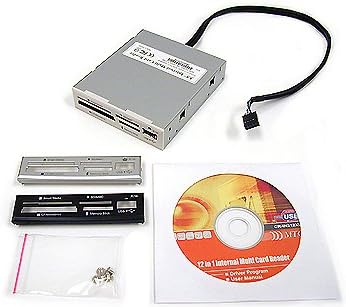
The Sony MRW620 is a reliable 17-in-1 reader ideal for users with Sony cameras. Rated 4.0, it is compatible with Vista and XP systems. It includes drive letter recognition software to ensure easy file transfer. Two colored faceplates are included for customization.
We may earn a commission when you buy through this link, at no additional cost to you.
It supports many memory types including SD, Memory Stick, and CF. The internal design keeps cables tidy. While older, it remains a practical choice for those with Sony equipment looking for seamless integration.
The main limitations are older OS support and slower USB 2.0 speeds. However, for basic file transfers, it works well. The included software can be helpful for users not familiar with Windows drive letters.
This reader is perfect for Sony camera users with older PCs. It offers brand-specific reliability and straightforward installation.
Designed to work seamlessly with Sony cameras, ensuring all proprietary Memory Stick formats are recognized easily.
Drive letter recognition software makes mapping drives simple, especially useful for legacy operating systems.
We may earn a commission when you buy through this link, at no additional cost to you.
This All-In-One Internal Card Reader is a compact option with a 5.0 rating. It fits in a 2.5 inch bay and includes black, silver, and white bezels. The build is described as reliable and high quality. It supports standard flash cards well.
We may earn a commission when you buy through this link, at no additional cost to you.
It is designed for users with limited space in their case. The multiple bezel options allow for customization. However, it lacks the extensive format list of other models. It is best for general SD and CF reading.
While specific speeds are not detailed, the high rating suggests reliability. It may not be fast for large data but handles typical tasks well. This is a simple solution for basic needs.
Choose this if you have a small PC case and need a simple reader. It is great for users prioritizing size and reliability over speed.
2.5 inch internal fit ensures the reader can be installed in smaller chassis that lack larger bays.
High-quality construction ensures the reader functions consistently over long periods without issues.
We may earn a commission when you buy through this link, at no additional cost to you.
The Akasa AK-ICR-07 features six ports for reading popular cards. Rated 4.2, it includes an extra USB port for sticks or phones. It fits 3.5 inch bays and includes two fascia panels. LEDs indicate power and activity for clarity.
We may earn a commission when you buy through this link, at no additional cost to you.
It supports SDHC and offers dedicated adapter ports for micro cards. This simplifies reading small cards without adapters. The design is convenient for front access. However, it costs more than basic readers.
Installation requires internal space and headers. The LEDs add convenience in dark environments. If you need a front USB port along with card reading, this is a good choice.
This reader is best for users needing extra USB connectivity. It is a solid option for those who value convenience and clarity with LEDs.
An additional USB port allows data transfer from USB memory sticks or USB-enabled mobile phones without extra hardware.
Two LEDs indicate power on, card in, and data transfer, ensuring you know the status at a glance.
We may earn a commission when you buy through this link, at no additional cost to you.
The MTG CR-IN212XU-1 supports 22 formats with four slots active at once. It uses USB 2.0 but offers hot-swappable plug-and-play. A metal case fits 3.5 inch bays. It supports CompactFlash, SD, and Memory Stick cards. Multiple bezels are included.
We may earn a commission when you buy through this link, at no additional cost to you.
It is bus-powered and does not need external power. This makes it simple to install. The four icons help identify slots easily. It is a good basic utility for standard card reading needs.
Without a rating, reliability varies. USB 2.0 speeds are slow for large files. However, it is a cheap option for occasional use. If you just need to move photos now and then, it works well.
Choose this for basic card reading without extra features. It is best for users who want simplicity and low cost.
Hot swappable and plug-and-play capability means you can insert or remove cards at any time without restarting the PC.
Bus-powered operation means no external power supply is required, making installation cleaner and simpler.
We may earn a commission when you buy through this link, at no additional cost to you.
Selecting the right internal media card reader requires considering compatibility, speed, and physical fit within your computer case.
Ensure the reader supports the specific memory cards you use, such as SDXC, CF, or Memory Stick. Look for models that explicitly list the formats you need to avoid compatibility issues.
Check the product details for formats like SDHC, CF, and MS to ensure your cards will work.
USB 3.0 offers faster data transfer speeds compared to USB 2.0. If you work with large video files or high-resolution photos, prioritize a reader with USB 3.0 support for better performance.
Prioritize USB 3.0 models for faster file transfers and improved workflow efficiency.
Internal card readers are designed for 3.5 inch or 5.25 inch drive bays. Measure your available space to ensure the unit fits your case properly without blocking other components.
Verify your case supports 3.5 or 5.25 inch bays before purchasing.
Most internal readers connect via a motherboard header. Check your motherboard documentation to see if it has the necessary USB 20-pin header to power the device directly.
Ensure your motherboard has a 20-pin header for internal connection and power.
Some models allow reading multiple cards at once. This feature is useful if you need to copy files between cards without swapping them out physically.
Look for Multi-LUN or simultaneous slot access if you often transfer data between multiple cards.
Higher-end models often feature copper-plated slots or metal casings. These materials improve signal stability and protect against wear over time.
Choose models with durable slots and materials for long-term reliability.
Some readers include extra USB ports or audio jacks. These can add convenience to your front panel setup by consolidating multiple functions into one device.
Consider models with extra USB ports for additional front-panel connectivity.
Budget models are cheaper but may lack speed or durability. Premium options often come with better warranties. Balance your budget with your performance needs to find the best value.
Compare warranties and prices to ensure you get reliable service for your investment.
Before installing, power off your computer and disconnect the power supply. Open the case and locate an empty 3.5 or 5.25 inch drive bay. Secure the reader in place using screws or brackets, then connect the USB header and power cables.
Once connected, install any required drivers on your operating system. Most modern systems like Windows and Linux detect the reader automatically. Insert your memory card into the appropriate slot to begin transferring files.
To maintain longevity, avoid inserting cards forcefully. Keep the slots clean from dust using compressed air occasionally. Always safely eject the card before removal to prevent data corruption.
Most internal card readers are plug-and-play on modern operating systems like Windows and Linux. However, check the product page for specific driver requirements if your OS is older.
USB 3.0 readers offer significantly faster data transfer speeds than USB 2.0 models. This makes a noticeable difference when transferring large video or photo files to your computer.
Many internal card readers are compatible with macOS. Always verify the product specifications list macOS support to ensure full functionality without issues.
You need either a 3.5 inch or 5.25 inch drive bay. Check your computer case specifications before purchasing to ensure the reader fits properly.
Check your motherboard manual for a 20-pin USB header. If you cannot find one, you may need an external card reader or adapter cable.
Some models like the Vantec and StarTech allow simultaneous access to multiple cards. This feature helps copy files between cards quickly without swapping them.
Most internal card readers are hot-swappable, meaning you can insert and remove cards without restarting the computer. Always use the safe eject option in your OS.
Many modern readers support SDXC cards up to 2TB. Check the product specifications to confirm the maximum capacity your specific model supports.
The StarTech Internal Card Reader leads our picks for its professional features and speed. For budget buyers, the SABRENT 74 in 1 offers unmatched versatility. The Vantec Link is the top choice for those needing massive capacity and reliability.
Prioritize USB 3.0 speed and format compatibility based on your workflow. If you work with video files, speed is more important. For casual use, broad format support may matter more than transfer rates.
Remember to check current prices and availability on Amazon before buying. Prices fluctuate often so we recommend verifying details before you purchase your final choice.